War fever

Definition and stakes

Friedrich Prinzing,  Epidemics Resulting from Wars

“ Scarlet fever, influenza, yellow fever, relapsing fever, and malaria (if the war is waged in countries where this disease is endemic—especially in the Lower Danube region, in the Netherlands, Spain, and Italy) have also played an important rôle in many wars. But we give the name ‘war pestilences’ only to those infectious diseases which in the course of centuries have usually followed at the heels of belligerent armies, such as typhus fever, bubonic plague, cholera, typhoid fever, dysentery, and small-pox ”

Source: Gutenberg

Friedrich Prinzing,  Epidemics Resulting from Wars

“ If we start from the time when more or less accurate descriptions enable us to determine the nature of the epidemics, we find that plague and typhus fever were the two diseases which, until a few decades ago, most commonly attacked the soldiers; the latter disease, which made its appearance in almost every war that was waged between the beginning of the sixteenth and the middle of the nineteenth century, consequently acquired the name ‘war-plague’. ”
Source: Gutenberg

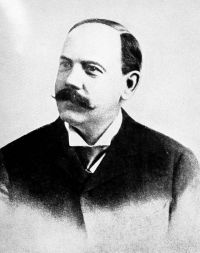
Portrait of Bernard Shaw Bernard Shaw,  Heartbreak House

“ The pestilence which is the usual accompaniment of war was called influenza. Whether it was really a war pestilence or not was made doubtful by the fact that it did its worst in places remote from the battlefields, notably on the west coast of North America and in India. But the moral pestilence, which was unquestionably a war pestilence, reproduced this phenomenon. One would have supposed that the war fever would have raged most furiously in the countries actually under fire, and that the others would be more reasonable. ”
Source: Gutenberg

Get perspective with Kwize: daily news enlightened by great literature