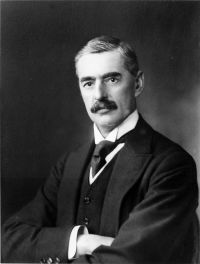
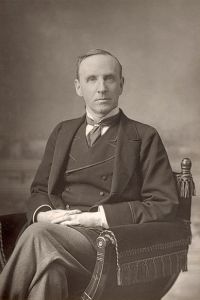
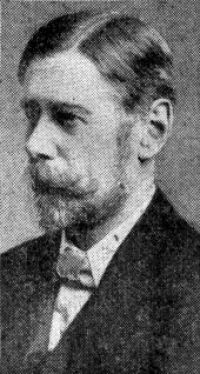
“ We are far from holding the opinion that a war minister, smothered in official papers, a scientific engineer, or even a soldier who has been well tried in the field, would, any of them, necessarily make the best minister of State where the sovereign does not act for himself; or in other words, we do not mean to say that this acquaintance with the nature of war is the principal qualification for a war minister; elevation, superiority of mind, strength of character, these are the principal qualifications which he must possess; a knowledge of war may be supplied in one way or the other. ”
War minister
Definition and stakes
Quotes about “war minister”
William Hunt, The history of England, from the accession of George III. to the close of Pitt's first administration…
“ While mistakes in the conduct of the war forbid us to call him a great war minister in the narrow sense of the term, we should scarcely refuse that praise in a wider, truer sense to a minister so dauntless in adversity, so fertile in resource, so deservedly trusted by the nation as "the pilot that weathered the storm". ”
George Francis Robert Henderson and Thomas Barclay, 1911 Encyclopædia Britannica (1911)
“ It is hardly necessary to observe that no civilian minister, however deeply he might have studied the art of war, could be expected to solve for himself the strategic problems which come before him. In default of practical knowledge, it would be as impossible for him to Duties of the War Minister. decide where garrisons should be stationed, what fortifications were necessary, what roads should be constructed, or how the lines of communication should be protected, as to frame a plan of campaign for the invasion of a hostile state. ”

Thomas Moore,
Memoirs of the Life of the Rt. Hon…
“ If, however, the Right Honorable Gentleman should say to me, 'Where else would you put that Noble Lord, would you have him appointed War-Minister again?' I should say, Oh no, by no means,—I remember too well the expeditions to Toulon, to Quiberon, to Corsica, and to Holland, the responsibility for each of which the Noble Lord took on himself, entirely releasing from any responsibility the Commander in Chief and the Secretary at War. ”
John Morley,
The Life of William Ewart Gladstone…
“ I know not where that principle has been admitted in our military administration. If we have committed gross errors, it has been owing to an excess much more than to a defect of professional influence and counsel. In my opinion the qualities of a good administrator and statesman go to make a good war minister, especially at this juncture, far more than those of a good soldier. ”
Lydia Hoyt Farmer,
The Life of La Fayette, the Knight of Liberty in Two Worlds and Two Centuries
“ The minister of war, in offering observations that will be made the subject of future deliberations, has just expressed his desire of completing our system of defence. Here, gentlemen, we naturally bring back to our memory the urgent call recently made by the ministry upon our patriotism to obtain the means necessary to a preserving policy, a respectable military strength, a guarantee of public tranquillity, a national dignity; and to an union of the people with the government. The minister had before represented the nation rising in a body at the voice of their king. ”
Sir C. E. Callwell, Experiences of a Dug-out, 1914-1918
“ Like many men of strong will and commanding ability, he was a centralizer by instinct and in practice. He took over the position of War Minister with very clearly defined conceptions of what must be done to expand the exiguous fighting forces of his country in face of the tremendous emergency with which it stood suddenly confronted. ”
George Francis Robert Henderson and Thomas Barclay, 1911 Encyclopædia Britannica (1911)
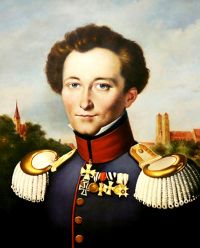
“ His foresight, his prevision of the accidents inevitable in war, would necessarily be far inferior to those of men who had spent their lives in applying strategical principles to concrete cases; and it is exceedingly unlikely that he would be as prolific of strategical expedients as those familiar with their employment. Nevertheless, a minister of war cannot divest himself of his responsibility for the conduct of military operations. In the first place, he is directly responsible that plans of campaign to meet every possible contingency are worked out in time of peace. ”
J. Holland Rose,
William Pitt and the Great War
“ It is impossible for any person to controvert the position I now state; and therefore, when you talk of a War Minister, you must mean a person to superintend the detail of the execution of the operations which are determined upon. ”
J. Holland Rose,
William Pitt and the Great War
“ Fox would be if he was Secretary of State and the Duke of Bedford First Lord of the Treasury. In short it depends, and must ever depend, on other circumstances than the particular name by which a person is called; and if you was to have a Secretary of State for the War Department tomorrow, not a person living would ever look upon him, or any other person but you, as the War Minister. All modern wars are a contention of purse, and unless some very peculiar circumstance occurs to direct the lead into another channel, the Minister of Finance must be the Minister of War. ”
Spenser Wilkinson,
Lessons of the War: Being Comments from Week to Week to the Relief of Ladysmith
“ But if war as a branch of the Nation's affairs ought to be entrusted to a man competent in that branch, what about the tradition that any politician of eminence in the party is fit to be the Cabinet Minister at the head of any branch of the public service? ”
Friedrich von Bernhardi,
Germany and the Next War
“ At the same time the Minister who conducts foreign policy must, on his side, never lose sight of what is in a military sense practicable; he must be constantly kept informed of the precise degree in which army and navy are ready for war, since he must never aim at plans which cannot, if necessary, be carried out by war. A veiled or open threat of war is the only means the statesman has of carrying out his aims; for in the last resort it is always the realization of the possible consequences of a war which induces the opponent to give in. ”
Thomas Wilhelm, A Military Dictionary and Gazetteer
“ An ancient form of ordnance of small size, the caliber of which was about 3 inches.Minister. Is one who acts not by any inherent authority of his own, but under another. Thus, in England all ministers act under a supreme authority, which is vested in the sovereign, lords, and commons, to whom they are responsible. In military matters, there is not only a war minister, but a secretary at war, who likewise acts conjointly with the secretary of state. ”
graf Leo Tolstoy, War and Peace
“ One man ought to be in command, and not two. Your Minister may perhaps be good as a Minister, but as a general he is not merely bad but execrable, yet to him is entrusted the fate of our whole country.... I am really frantic with vexation; forgive my writing boldly. It is clear that the man who advocates the conclusion of a peace, and that the Minister should command the army, does not love our sovereign and desires the ruin of us all. ”
Indiscreet Letters From Peking
“ The commanders of the British, American, German, French, Italian, Russian, Austrian and Japanese detachments have met and conferred—each carefully instructed by his own Minister just how far he is to acquiesce in his colleagues' proposals, which is, roughly speaking, not at all. We can have no effective council of war thus, because there is no commander-in-chief, and everybody is a claimant to the post. ”
A. N. Kuropatkin, The Russian Army and the Japanese War…
“ But, as has been explained, the policy of my department was bound up with that of the Ministries of the Interior, of Finance, and of Foreign Affairs, and there had been a difference of opinion between the late War Minister and his colleagues on some most important points. As there was no co-ordinated programme between the War and Navy Departments, I was forced to spend my first two years in office in framing an exhaustive statement for [Pg xxiv] our guidance. ”
Hermann Hagedorn,
Makers of Madness
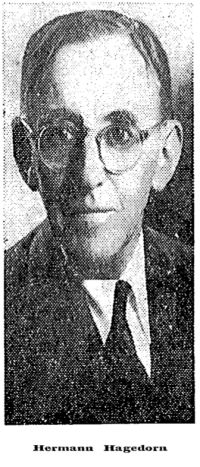
“ The minister of war, a tall, stern, bearded man with deep-set eyes and many furrows, is sitting at a large, mahogany desk-table, Left.The chief of staff, silent, motionless and watchful, stands beside him with his hands resting on the table-top. He is thin, old and emaciated, clean-shaven, firm-lipped, and looks startlingly like a bird of prey. Right, stands a group of generals and other officers. ”
Harold Spender,
The Prime Minister
“ For, other things being equal, the first duty of a soldier is the care of his own army. In our country it seemed the wisest course for the War Cabinet to leave all important military decisions to the military chiefs. The previous Government, indeed, had fortified the Generals with an Order in Council which practically gave them strategic control. ”
Central Intelligence Agency, National Intelligence Survey 9… (1974)
“ He exercises control of the three regular services through the Ministers of Army, Navy, and Air; he exercises direct control over the Air Defense Command in time of war. There is no minister of defense. The Minister of Interior controls the peacetime administration and employment of the Civil Guard and the Armed Police. However, under the reorganization of the army ministry, which is to be implemented during 1974, the Minister of Army will control the peacetime and wartime administration of the Civil Guard. ”
W. Keith Hancock and Margaret M. Gowing, British War Economy — Chapter III.
“ It did not, however, establish itself as a permanent institution of war government. Some people doubted whether the same body could handle effectively both supply and strategy. [24] There was moreover difficult in finding the appropriate chairman. The office of the Minister for Co-ordination of Defence had been established in 1936 for peace-time duties with the Committee of Imperial Defence; in time of war the Minister had no clearly defined functions. The War Cabinet was the real co-ordinator, and no one but the Prime Minister could be its effective spokesman on defence policy. ”
Harold Spender,
The Prime Minister
“ One is the safety and honour of his own country.He regarded that as involved in his proposal to reform the machinery of war-control.He had come to the conclusion that a smaller and stronger authority was absolutely necessary for the prosperous conduct of the war. He also held, with equal strength of conviction, that no man could bear at the same time the double burden of parliamentary leadership and of the day-by-day task of Chairmanship of the new War Council, with its entirely full and detailed responsibility for the conduct of the war. ”
Spenser Wilkinson,
Lessons of the War: Being Comments from Week to Week to the Relief of Ladysmith
“ The traditional practice of having a civilian Minister inside the Cabinet with all the authority, and a soldier with all the knowledge outside the Cabinet, was devised for electioneering purposes, and not for war. ”
Stephen Lucius Gwynn,
The Life of the Rt. Hon. Sir Charles W. Dilke…
“ They have now forced on Parliament and on the Prime Minister the necessity of taking real action upon his declaration that 'the problem of Imperial defence cannot be left to one department or two departments acting separately.' The utilization of the resources of the British Empire for war must be the business of the Prime Minister, who is above the War Office and the Admiralty, and who alone can lead the Cabinet to co-ordinate the efforts of the two services. ”
Hugo Münsterberg,
The Americans
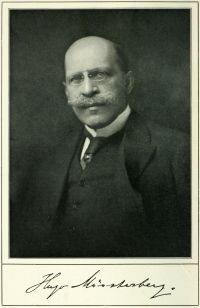
“ In the case of the army, as well as of the navy, the functions of the secretary are decidedly more important than those, say, of a Prussian Minister. They concern not only administration, but also, in case of war, are of decisive weight on the movements of all the forces, since the President as commander-in-chief has to act through these ministers. ”
Sir C. E. Callwell, Experiences of a Dug-out, 1914-1918
“ I have, moreover, good reason for believing that on that day there was present on the Treasury bench a representative of the War Office, not a Cabinet Minister, who was ready and willing to defend the Master-General of the Ordnance and who was acquainted with the facts, but that the Minister of Munitions, being in charge of the House, refused to sanction his speaking. Happily such occurrences are rare in the public life of this country. ”
D. Thomas Curtin, The Land of Deepening Shadow: Germany-at-War
“ It is the duty of the German Minister and his staff in any foreign country, and particularly in countries likely to become hostile, to get as close as possible to members of Governments, members of Legislatures, leaders of thought and society, and members of the Press, especially the first and the last in this category. ”
Sir John Adye,
Recollections of a Military Life
“ The army must be the rallying point; the army must furnish example, must furnish instruction, must give us the principles on which that national system [Pg 267] of defence must be formed; and by which the voluntary forces of this country, though in a military view inferior to a regular army, would, fighting on their own soil, for everything dear to individuals and important to a State, be invincible.'These quotations will, I think, give a general idea of the views which were uppermost in the mind of the Minister for War when he gave vitality to the principle of localisation. ”
Korea & Her Neighbours — Chapter XXXII
“ The Minister for War, who must be a general officer, has charge of the military administration of an army lately fixed at 6,000 men, and the chief control of men and matters in the army, and is to exercise supervision over army divisions, and all buildings and forts under his Department. ”
Various, Trial of the Major War Criminals Before the International Military Tribunal… (1947)
“ Those are the demands I accepted. But in addition it was a matter of course that I immediately accepted the appointment as armament Minister without any qualms. I have never denied that. I only said that I would rather be an architect than an armament Minister, and that can probably be understood.MR. COUNSELLOR RAGINSKY: And now we shall listen to what you said to the Gauleiter in your speech in Munich:“I gave up all my activity, including my actual profession, architecture, to dedicate myself without reservations to the war task. ”
Henry Adams,
The Life of Albert Gallatin
“ You cannot apply your faculties to a more useful or nobler purpose. I am now in my 82d year, and on taking a retrospective view of my long career I derive the greatest consolation for my many faults and errors from the consciousness that I ever was a minister of peace, from the fact that the twenty last years of my political life were almost exclusively employed in preventing the war as long as I could, in assisting in a speedy restoration of peace, and in settling subsequently as many of the points of difference as was at the time practicable. ”
Various, Trial of the major war criminals before the International Military Tribunal… (1947)
“ Reich Minister for Air Force, Milch and Bodenschatz, both of whom were witnesses here.The contents, summarized, I will not read.The minutes of the meeting:“Ministerpräsident, General Field Marshal Göring emphasized in a preamble that according to the Führer’s wishes the Reich Defense Council was the determining body in the Reich for all questions of preparation for war. It is to discuss only the most important questions of Reich defense. They will be worked out by the Reich Defense Committee. ”
Moritz Busch, Bismarck (1898)
“ His immediate entourage is well disposed. That cannot however be said of all his Ministers. The Minister of War is without doubt sincerely anxious, and is doing his utmost to see the campaign brought to a satisfactory conclusion. He is in that respect thoroughly reliable, and he will no doubt be found on the right side in the matter of the conditions of peace. Count Bray, on the other hand, is and remains ultramontane and Austrian in his views. In his heart of hearts he is opposed to the war, and for him our successes have been too rapid, and our victories too complete. ”
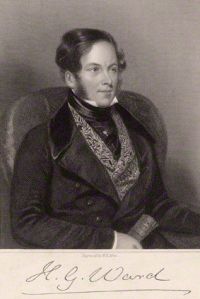
Henry George Ward,
Mexico in 1827/Volume 1
(1828)
“ This, as long as there exists no cause of complaint common to the whole army, will be sufficient to preserve tranquillity. In the mean time, due attention should be paid to the manly representations of the Minister of War respecting the mode in which the army is at present recruited, and the greatest pains taken to prevent the ranks from being filled with the scum and refuse of society, with which the States but too often supply the deficiencies in their legal Contingent. ”
John Maynard Keynes,
The Economic Consequences of the Peace…
“ 'They are a lot of hard-faced men', he said, 'who look as if they had done very well out of the war.'This was the atmosphere in which the Prime Minister left for Paris, and these the entanglements he had made for himself. ”