Weighing scale

Definition and stakes

Homer Heath Nugent,  A Book of Exposition

“ A pair of ordinary weighing scales also exemplifies the first order of levers. The knife edge on which the beam is balanced serves as a fulcrum; it is placed exactly in the middle of the beam, which we shall suppose to be 10 inches long. If we place a 1-lb. weight in one scale to represent the resistance to be overcome, the weight will be lifted the moment that a pound of sugar has been placed in the opposite scale—the sugar thus representing the power. ”
Source: Gutenberg

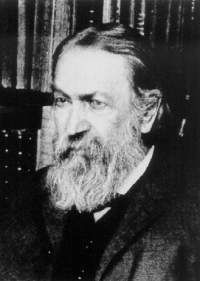
Portrait of William Stanley Jevons William Stanley Jevons,  The principles of science

“ One reason of the great accuracy of weighing with a good balance is the fact, that weights placed in the same scale are naturally added together without the slightest error. There is no difficulty in the precise juxtaposition of two grams, but the juxtaposition of two metre measures can only be effected with tolerable accuracy, by the use of microscopes and many precautions. ”
Source: Gutenberg

Brother Potamian,  Makers of Electricity

“ W=Mg.
by which he simply means that the weight of a body is directly proportional to its mass (M) , which is constant wherever the body may be taken, and to the intensity of gravity (g) , which varies slightly with geographical position. As both scale-pans of an ordinary balance are equally affected by the local value of g, it follows that equilibrium is established only when the two masses—that of the body and that of the standards—are themselves equal: hence weighing is in reality only a process of comparing masses, i.e., a process of "massing."
”
Source: Gutenberg

Get perspective with Kwize: daily news enlightened by great literature