
“ The one only thing to do with wild oats is to put them carefully into the hottest part of the [80] fire, and get them burnt to dust, every seed of them. If you sow them, no matter in what ground, up they will come, with long, tough roots like couch-grass, and luxuriant stalks and leaves as sure as there is a sun in heaven—a crop which it makes one’s heart cold to think of. ”
Wild oats
Definition and stakes
The theme of “wild oats” has been addressed by authors such as Horace Greeley, Thomas Forsyth Hunt, James Buckman, Various and Chautauqua Institution. It is often associated with terms like oat, wheat, grain, soil and seed.
Quotes about “wild oats”
 Richard Le Gallienne,
The Quest of the Golden Girl: A Romance
Richard Le Gallienne,
The Quest of the Golden Girl: A Romance
“ Wild oats will get sown some time, and one of the arts of life is to sow them at the right time,—the younger the better. ”
Wallis Nash, Two Years in Oregon
“ Traveling north to Portland by train, this last harvest, it was sometimes even hard to say whether wheat or wild-oats were intended to be grown. Nothing but summer fallowing, thoroughly applied and regularly followed, can remedy this. I have known a farmer to send his wheat to the mill, and get back half the quantity in wild-oats. To the timothy-hay fields a noxious plant called "tar-weed" is the great enemy on all damp or low-lying spots. ”
Richard Folkard, Plant Lore, Legends, and Lyrics
“ In olden times, conjurors and wizards predicted events and told fortunes by means of the awns of these Oats, which they caused to wriggle about by holding them in a damp hand, or breathing upon them. In these jugglers’ hands the Wild Oat became a magical plant, figuring at their will as the leg of an enchanted spider, Egyptian fly, or some other wonderful insect.——To dream of a field of ripe Oats just ready for the sickle is a most favourable omen, under all circumstances. ”
James Buckman, Science and Practice in Farm Cultivation
“ Crop oats, like wheat, have ever been considered as a direct gift from Ceres, and few, indeed, amongst scientific men were willing to believe that they were derived from a wild and weed species. Still, the farmer had long maintained that oats, when cultivated, often left behind them weed oats; and in some districts of Worcester, Gloucester, and Warwick, we have known men refuse to grow oats as a crop from their fear of producing the terrible weed, which, indeed, the wild oat is on all hands admitted to be. ”
 John Timbs,
Knowledge for the Time
John Timbs,
Knowledge for the Time
“ Let a head of it be laid down in a moistened state upon a table, and left there for the night, and next morning it will be found to have walked off. The locomotive power resides in the peculiar hard awn, or spike, which sets the grain a-tumbling over and over sideways. A very large and coarse kind of wild oats, brought many years ago from Otaheite, was found to have the ambulatory character in uncommon perfection. When ordinary oats is allowed by neglect to degenerate, it acquires this among other characteristics of wild oats.—R. Chambers.How Shyness spoils Enjoyment. ”
James Buckman, Science and Practice in Farm Cultivation
“ Avena flavescens (Yellow Oat-grass) , which is better. It, too, occurs on chalky soils; while the Avena pratensis (Meadow Oat-grass) is found too frequently in poor clays or on starved moors, in which its rigid leaves and harsh structure render it little, if any, better than a weed.One of the most interesting species of the genus is the Avena fatua (Wild Oat) , well known as a weed in stiff arable soils. This is the parent of the crop oats in cultivation, and there is reason to know that by degeneracy the crop oat in some districts leaves behind a pest of wild oats. ”
William Griffith, Journals of Travels in Assam, Burma…
“ Wild oats occur commonly, although they are not made any use of; the seed is large, and ripens sooner than any of the others; from the size of the uncultivated specimens, I am sure that oats would form an excellent crop.In the fields Cichorium is very common, and Carduacea, Centaurea cyanea, Dipsaceæ, and in certain low places an Arundo, are the most common weeds; two or three Silenaceæ, and Umbelliferæ also occur. In the ditches Typha, Butomus, watercresses, Alomioides, Ceratophyllum, Lemna gibba? Confervæ, Gramineæ two or three, Ranunculus, Potamogeton, one species immersa; Mentha, Sium. ”
John David Borthwick, The gold hunters (1917)
“ Oats and barley are the principal crops raised in the mountains. In some of the little valleys a species of wild oats, which makes excellent hay, grows very luxuriantly. In passing through one such place, where the grasshoppers were in clouds, we found a number of Indian squaws catching them with small nets attached to a short stick, in the style of an angler’s landing-net. ”
William Montgomery Clemens, Famous funny fellows (1882)
“ Oats should not be planted wild. Still we have known oats sown wild to produce a larger crop than the tame oats. Many of them are sown by moonlight and some by gas-light, but it is sometimes worse for the man who raises them than for the oats themselves. The best place to sow oats is in doors by a nice fire, and with a little sprinkling of cold water. Whiskey is a destroyer of the crop, and although very good for harrowing in, induces a growth of weeds. In Scotland the oats are fed to men, and in England to horses ”
 Sylvanus Stall,
With the Children on Sundays
Sylvanus Stall,
With the Children on Sundays
“ There are some grown persons, as well as children, who think that they can do very wrong things while they are young, and afterwards suffer no bad results. People sometimes say, "Oh, well! let us sow our wild oats while we are young." Now the Bible tells us that if we sow wild oats, we must reap wild oats. Four or five handfuls of wild oats will produce a whole bag full of wild oats when gathered in the harvest of after life. ”
C. W. Haskins, The Argonauts of California: being the reminiscenses of scenes and incidents that occurred in… (1889)
“ Wild oats being indigenous to the soil, or, in other words, the proper elements being contained within the soil necessary to produce this variety of cereal will under certain conditions, for instance, such as plowing, cultivation, or in stirring of the loose soil, spring forth spontaneously without the necessity of previously sowing the seed, and thus preventing the germination of the wheat. ”
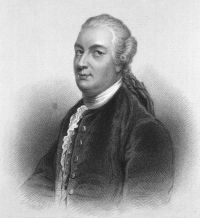 James Bruce,
Travels to Discover the Source of the Nile…
James Bruce,
Travels to Discover the Source of the Nile…
“ The ground below those trees, all throughout Aroossi, is thick covered with lupines, almost to the exclusion of every other flower; wild oats also grow up here spontaneously to a prodigious height and size, capable often of concealing both the horse and his rider, and some of the stalks being little less than an inch 561 in circumference. They have, when ripe, the appearance of small canes. The inhabitants make no sort of use of this grain in any period of its growth: the uppermost thin hulk of it is beautifully variegated with a changeable purple colour ”
“ Sweet vernal grass, tall oat grass, holy grass, redtop, animated or wild oats, blue-joint, and porcupine grass are among them. When mature, the grain and glumes drop off, or are pushed off, and go to the ground. When moist, these awns untwist and straighten out, but when dry they coil up again; with each change they seem to crawl about on the ground and work down to low places or get into all sorts of cracks and crevices, where the first rain is likely to cover them more or less with earth, after which they are ready for growth. ”
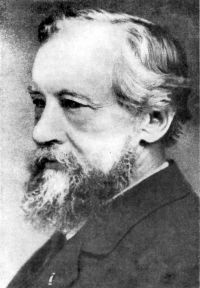 Hugo de Vries,
Species and Varieties, Their Origin by Mutation
Hugo de Vries,
Species and Varieties, Their Origin by Mutation
“ At the time of harvest it may not have become fully ripe, while the varieties mixed with it had reached maturity. The wild oat, Avena fatua, is very common in [101] Europe from whence it has been introduced in the United States. In summers which are unfavorable to the development of the cultivated oats it may be observed to multiply with an almost incredible rapidity. It does not contribute to the harvest, and is quite useless. ”
 Margaret Pedler,
The Vision of Desire
Margaret Pedler,
The Vision of Desire
“ There’s always a bit of the devil in them. And I happen to know that that demure little person down at your cottage has sown quite a sprinkling of wild oats.” “Wild oats in a woman are a very different thing from wild oats in a man,” remarked Eliot, pouring himself out a whisky. ”
1911 Encyclopædia Britannica (1911)
“ The wild oat, moreover, has a long stiff awn, usually twisted near the base. In the cultivated oat it may be wanting, and if present it is not so stiff and is seldom bent. The grain is very small and worthless in the one, but larger and full in the other. There are now many varieties of the cultivated oat included under two principal races—common oat or panicled oats with a spreading panicle, A. sativa proper, and Tatarian oats or banner oats which has sometimes been regarded as a distinct species, A. orientalis, with contracted one-sided panicles. ”
James Buckman, Science and Practice in Farm Cultivation
“ The Avena fatua (wild oat) is an annual grass which almost universally accompanies agrarian circumstances; that is to say, it seldom, if ever, occurs in a truly wild aboriginal state, and is therefore not found in uncultivated tracts, but is the common attendant on tillage, and in some soils is a most common and disagreeable weed in various agricultural crops, but more especially amid grain, whether of wheat, barley, or oats. ”
James Buckman, Science and Practice in Farm Cultivation
“ Now, although we by no means wish to advance the theory of transmutation, and cannot believe that by any plan barley can be converted into oats, or oats into barley, we are yet confident that what has been termed ennobling, or the producing of a cultivated plant from a wild one, is oftentimes comparatively easy, and in none more so than in the production of crop oats from the wild species, Avena fatua. ”
 Victor Hugo,
Les Misérables
(1862)
Victor Hugo,
Les Misérables
(1862)
“ He loved to saunter through fields of wild oats and corn-flowers, and busied himself with clouds nearly as much as with events. ”
The New Student's Reference Work (1914)
“ Oats, species of the genus Avena, belonging to the grass family. The common cultivated oat is A. saliva, which is native to the eastern hemisphere. The genus contains about 50 species, which are widespread in the north temperate regions. In the United States three species occur, the purple oat (A. striata) , Smith's oat (A. Smithii) and the common wild oat (A. fatud) . The oat is hardy, thrives best in a cool, moist climate, and is extensively grown in the United States, Canada and northern Europe. ”
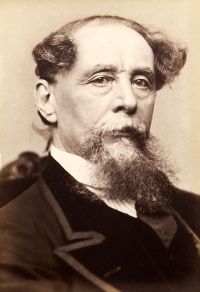 Charles Dickens,
Little Dorrit
(1857)
Charles Dickens,
Little Dorrit
(1857)
“ the rather, as public appointments chanced to be scarce, and his genius, during his earlier manhood, was of that exclusively agricultural character which applies itself to the cultivation of wild oats. ”
Sylvanus Stall,
With the Children on Sundays
“ Now the same thing is true with regard to the grain that grows in the field. No one ever saw potatoes grow without being planted and cultivated. Rye and oats and wheat do not grow wild. Weeds will grow without being sown or planted, but grain and vegetables not only have to be planted, but have to be taken care of. Possibly you might think that my statement was not wholly correct, because we go out into the orchard and gather apples and pears and peaches, and other kinds of fruit which have no hard shells on them, and which do not have to be planted in the spring of the year. ”
E. Stenhouse, An Introduction to Nature-study
“ It is pale in colour and soft. It spreads rapidly by means of creeping stolons.Oat grasses are of several species; one is cultivated as a cereal, others are valued as forage for cattle, while others still are [Pg 137] troublesome weeds. The wild oat (Fig. 108) is a common weed in cornfields. It is an annual, from two or three feet high, with large spikelets forming a loose panicle, the flowers having awns twice as long as the spikelets. The cultivated oat is supposed to be a variety of the wild oat. The panicle of the yellow oat grass is oblong, and has erect spikelets. ”
P. T. Ross, A Yeoman's Letters
“ Sometimes we get bundles of oat hay out of the barns we visit en route, and strap them, with armfuls of green oats pulled from the fields, fore and aft of our saddles, till we look like fonts at harvest festivals. ”
The Circle of Knowledge: A Classified…
“ A crop of millet leaves the soil where it grew in a delightful condition of tilth. Its yield of seed is from twenty to forty bushels per acre.Oats (Avena sativa) have a broad panicle; the individual ears are two-rowed, with and without beards. Another much-cultivated species are the bearded oats (A. orientalis) . The greater portion of the oats crop of the United States is grown in the north central states, more than one-half in the six states of Illinois, Iowa, Minnesota, Wisconsin, Nebraska and Ohio, ranking in order named. ”
“ The entire profits of an oat-crop depend upon early sowing.Harvest as soon as the grain begins to harden, and the straw to turn yellow. Allowed to get quite ripe, they shell badly, and the straw becomes useless, except for manure. Cut with reaper or cradle, and bind: all grain so cut is more easily handled, thrashed, and fed. Mow no grain that is not so lodged down that a cradle or reaper can not be used. The straw of oats cut quite green is nearly as good as hay. ”
 John Andreas Widtsoe,
Dry-Farming : A System of Agriculture for Countries under a Low Rainfall
John Andreas Widtsoe,
Dry-Farming : A System of Agriculture for Countries under a Low Rainfall
“ Several varieties have been found which yield well on lands that receive an average annual rainfall of less than fifteen inches. Others will no doubt be discovered or developed as special attention is given to dry-farm oats. Oats occurs as spring and winter varieties, but only one winter variety has as yet found place in the list of dry-farm crops. ”
Brantz Mayer, Mexico, Aztec, Spanish and Republican (1853)
“ The genial soil is well adapted for the growth of those grains which are suitable for European or North American emigrants. Wheat, barley, rye and oats grow abundantly, as well as potatoes, turnips, onions, and all the roots known to our gardeners and farmers. Oats, of the species cultivated in the Atlantic States, are annually self-sown on all the plains and hills along the coast, and as far inland as the sea-breeze has a marked influence on the climate. ”
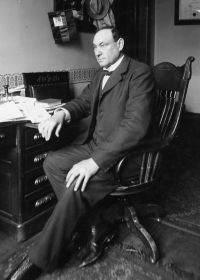 Harvey Washington Wiley,
Foods and Their Adulteration
Harvey Washington Wiley,
Foods and Their Adulteration
“ Oats are grown in almost every part of the United States, but chiefly in the northern and western portions. In the southern states the crop is planted in the late autumn or early winter. In the northern states it is chiefly a spring crop, being sown early in the spring as soon as the ground is in fair condition. The oat crop is one which requires a rather abundant and well-distributed rainfall. A spring drought is very detrimental to the growth of oats, much more so than wheat or rye. It is a crop which is well suited to be grown under irrigation. ”
The Circle of Knowledge: A Classified…
“ Oats thrives best in cool weather with abundant moisture, and in the principal oats territory should be sown as early as possible in the spring—earlier than any other spring grain. The ground for oats should be plowed, but it is not uncommon to merely disk harrow the land before sowing. If the latter, about four bushels is sown to the acre, broadcast or drilled, but on well prepared ground ten to twelve pecks of clean, graded seed is sufficient. In the main the oats crop is harvested, stacked and threshed as other small grains. ”
Edwin Bryant, What I Saw in California
“ Oats and mustard grow spontaneously, with such rankness as to be considered nuisances upon the soil. I have forced my way through thousands of acres of these, higher than my head when mounted on a horse. The oats grow to the summits of the hills, but they are not here so tall and rank as in the valleys. ”
Robert Gordon Anderson, Seven O'Clock Stories
“ Very glad they are to get their heavy leather collars and harness off and rest in the cool barn. They have hay to eat but they have been working hard so they have oats besides. Jehosophat, Marmaduke, and Hepzebiah eat oats too but theirs are flattened out and cooked. We call it oatmeal. The oats for the horses are not flat but round like little seeds, and are not cooked on any stove. Farmer Green cuts the stalks in the oat field. ”
Thomas Forsyth Hunt, The Young Farmer: Some Things He Should Know
“ The wheat and oat crops have increased about six and one-half times in 50 years, the hay crop five and one-half times, while maize has increased four and one-half times. Cotton, the only other great staple 141 crop, has increased four times in the same period. The oat crop has increased the most rapidly of any since 1880. It is interesting, and may be significant, to note that, while the production of wheat and barley in Great Britain has decreased about one-half in thirty years, the production of oats has increased somewhat. ”
 Albert S. Evans,
A La California
(1873)
Albert S. Evans,
A La California
(1873)
“ When the first rain comes, the oats break down and fall upon the earth, and in a few weeks totally disappear, leaving nothing whatever for the cattle to feed upon until the seed, which during the summer has been sowing itself in the cracks and crevices of the earth formed by the drying up of the soil, and been trampled in and covered up by the hoofs of the animals, starts into new life and in a few days clothes all the hills in vivid green again. ”
Related terms
Authors who wrote about “wild oats”
Horace GreeleyThomas Forsyth HuntJames BuckmanVariousChautauqua InstitutionWilliam L. Grant, Arthur P. Coleman…Harvey Washington WileyJ. H. WaldenAlbert S. EvansEdward CorningCharles William BurkettBrantz MayerSylvanus StallW. J. BealWilliam Montgomery ClemensJohn David BorthwickVictor HugoMargaret PedlerWilliam GriffithJohn Timbs
Harvey Washington WileyJ. H. WaldenAlbert S. EvansEdward CorningCharles William BurkettBrantz MayerSylvanus StallW. J. BealWilliam Montgomery ClemensJohn David BorthwickVictor HugoMargaret PedlerWilliam GriffithJohn Timbs