Wing (anatomy)

Definition and stakes

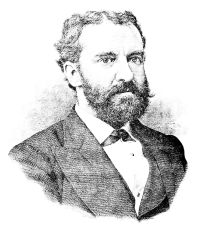
Portrait of James Bell Pettigrew James Bell Pettigrew,  Animal Locomotion; or, walking…

“ The muscles of the wing are so arranged that they can propel it in a horizontal, vertical, or oblique direction. It is a matter of the utmost importance that the direction of the stroke and the nature of the angles made by the surface of the wing during its vibration with the horizon be distinctly understood; as it is on these that all flying creatures depend when they seek to elude the upward resistance of the air, and secure a maximum of elevating and propelling power with a minimum of slip. ”
Source: Gutenberg

Portrait of James Bell Pettigrew James Bell Pettigrew,  Animal Locomotion; or, walking…

“ A wing constructed on this principle gives a continuous elevating and propelling power. It develops figure-of-8 curves during its action in longitudinal, transverse, and oblique directions. It literally floats upon the air. It has no dead points—is vibrated with amazingly little power, and has apparently no slip. It can fly in an upward, downward, or horizontal direction by merely altering its angle of inclination to the horizon. It is applied to the air by an irregular motion—the movement being most sudden and vigorous always at the beginning of the down stroke.—Original. ”
Source: Gutenberg

Get perspective with Kwize: daily news enlightened by great literature