AI-generated from sources
Father Goriot's mistake, or when parents should hand over their wealth
In Brief
- In older models of the family, property and command formed a single bond: a son was told to treat all he owned as his father's and to obey him in all things.
- No gift guarantees gratitude: an ancient moralist already held that a father's later conduct can cancel what his children owe him, even for the gift of life.
- Montaigne, who would rather be loved than feared in his old age, called miserable the father whose only hold on his children is their need of his help.
- Waiting until death has its own costs: estates divided at the owner's death left farms to decay, and later, as standards of child-care and education rose, many parents gave early—schooling, a start in marriage—and could then claim support, though not a shared roof.
Main authors


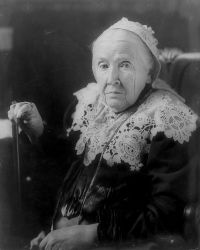
Father Goriot has given everything. In Julia Ward Howe's retelling, his daughters received a rich dowry when they married, yet they seek him out only when they want money. He sells his last piece of silver to help them and dies in a low boarding-house, tended by the charity of strangers, tormented by their bickering and "not cheered for one moment by their affection" [1]. The scene reads like a warning against the living gift. A father who has nothing left to give seems to have nothing left to be loved for. The prudent conclusion follows easily: keep your property in hand while you live, since the purse is the last instrument of a parent's authority.
The same scene supports the opposite reading. If affection leaves with the money, perhaps it was never affection at all, and the father who hoarded would only have bought a longer pretence. Montaigne judged "very miserable" the father whose only hold on his children is the need they have of his assistance [2]. Between these two lessons runs a quarrel as old as the family estate. It concerns timing—whether parents should hand over goods, education and independence while alive, or hold them until death—but it is never only about money. Filial duties and inheritance customs show that wealth moving between generations can carry command with it, and that a way of transmitting property can also be a way of distributing obedience.
Goriot's dowries, or the gratitude no gift can buy
In the oldest model, the question of a gift before death barely arises, because what the son has is, by duty, his father's. A list of filial duties quoted by Edwin Hatch, in his 1914 study of Greek ideas in the Christian church, asks the son to consider all he has to be his father's property, to obey him in all things and to give place to him everywhere [3]. Property and obedience form a single bond. The Anti-Slavery Examiner defends a milder version of the same arrangement. The parent's legal claim to a child's services, it argues, is a slight return for the toil of rearing and is indispensable to the family; the child who helps his parents increases a common stock in which he has a share [4]. A family run as a common stock has one manager. To give early would be to break it up.
The fear of ingratitude grows out of this model. Once wealth can circulate outside the father's hands, the son's loyalty may follow it elsewhere. An early Christian text collected in the Ante-Nicene Christian Library offers, as a self-evident case of wickedness, the son raised with every care who leaves his father for another man he sees to be richer, shows that man the honour he owed at home, and refuses his father his paternal rights [5]. The comparison is revealing. It imagines filial honour as something a wealthier patron could capture. Goriot's daughters need no rival patron: they come back to their father whenever they want money, and he keeps paying until he has nothing left to sell [1].
A far older moralist undermines the premise of the whole calculation. Seneca, in his treatise on benefits, asks whether some fathers are not so cruel that their sons are right to disown them [6]. They have not taken back the life they gave, he answers; their later conduct has destroyed the gratitude that was due for it. The benefit remains, the obligation does not. If even the gift of life binds only on condition, it is hard to see how a dowry or an estate could secure obedience on its own. The prudent father and the moralist agree that gratitude is fragile. They part on the remedy: the first keeps the purse, the second asks the father to deserve what he is owed.
The moral manuals written for the home tried a third remedy, which was to make gratitude a matter of conscience. John S. C. Abbott leads the child in imagination to the darkened chamber where his parents lie dying, and promises him remorse for every unkind word and every act of ingratitude [7]. Emory Adams Allen holds that parents incapacitated by age and infirmity remain "rallying points" around which affection and obedience gather [8]. Here authority survives the loss of every practical role. But it survives only by being preached, and the preaching leans on the deathbed—the very moment the prudent father had reserved for distributing his goods.
Montaigne's backshop, or love rather than fear
Montaigne turns the problem around. For him, the father who governs by severity and dependence is not strong but ridiculous. It is folly and injustice, he writes, to deny grown children familiarity with their father and to wear a stern face to keep them in awe; the result is "a very idle farce" that makes fathers distasteful and even laughable to their own children [9]. His reason is a plain observation about power. The children already have youth and vigour, and with them the favour of the world. A father who pretends to command them is staging an authority he no longer has.
His preference for affection is not sentimental; it is a judgment about old age. Though he could make himself feared, he would much rather be loved, because old age has so many defects and is so exposed to contempt that the best thing a man can acquire is the kindness of his own family [10]. Fear lasts as long as strength. Affection may outlast it. Yet Montaigne gives no guarantee that affection will come by itself. Natural affection, he observes, has "very weak roots": for a little profit, mothers are parted from their own infants to nurse the children of others [11]. If blood does not secure love, money will not either. It has to be earned.
The same logic makes him suspicious of affection held in reserve. He notes that fathers hide their affection from their children to maintain respect, as wives hide theirs from their husbands, and declares that this mystery is not to his taste [12]. In the same passage he mocks the mourners whose loud grief shows only that they never loved the dead until they were dead. Reserved tenderness and reserved wealth follow the same pattern. A father who keeps both locked away until the end makes his death the single moment of his generosity, and teaches his family to wait for it.
Montaigne does not, however, recommend giving oneself away. Wives, children and goods must be had, he writes, but happiness must not depend on them; a man must keep a backshop of his own, entirely free, where his true liberty resides [13]. The distinction matters. What the father keeps is not the purse as a lever but a freedom whose happiness does not depend on wife, children or goods. Read in this light, Goriot's ruin lies less in having given than in having kept nothing for himself—not even his silver [1].
The Limousin farm, or the patrimony as a throne
Inheritance customs show more plainly than any moralist how property carries command. The Catholic World, in 1865, describes a rule by which the patrimony is divided equally among the sons, except that the eldest receives one-tenth more [14]. In return he is expected to guard the family's interests and above all to look after his sisters, who cannot marry without his consent; daughters inherit nothing unless there are no male heirs. The extra share is stated in figures, and what it pays for is a duty of guardianship. What passes at the father's death is not only land but the office of head.
For the defenders of the undivided estate, the patrimony was the family itself. In Henry Bordeaux's novel The Will to Live (1915), a speaker complains that the young no longer understand what the patrimony once meant: "the material force of the family", the whole family grouped about one head and sure of enduring because it held together [15]. With the forced division of estates, the law scatters the inheritance at death. Between each heir looking after himself and the constant meddling of the state, he concludes, there is no more family. His grievance is not against greed but against dispersal.
Yet limits of this kind also gave the children a claim that no father's will could touch. Under a rule described by Le Roy Hooker in 1900, a parent with five or more children could dispose by will of only half the estate; the rest belonged to the children and was divided equally among them, the minors' shares held in trust [16]. A folk morality recorded in Folk-Lore in 1890 went further. It recognised no individual right in the matter, held that no man was free to do what he would with his own, and treated a bequest outside the next of kin as an offence against right [17]. Here the heir's claim exists long before the inheritance. The father holds his goods, but as the trustee of a line.
Division at death has a cost that Sabine Baring-Gould, writing in 1898, saw inscribed in the buildings themselves. Because everything will be divided when the owner dies, no owner cares to spend money on putting the place to rights; he must hoard his money for the children who will not take the farm [18]. One heir receives a tumble-down tenement, the others the money that could have made it habitable. Repeated over generations, the arrangement drives families from their land; in the Limousin, he reports, hardly a family keeps its hold beyond the third generation. The hoarding father is not a miser. He is saving for a division that will ruin the house he saves for.
The partisans of equal division saw the tyranny on the other side. Patrick Matthew asked where, among great landholders, one could find the "unnatural parent" who would not wish to see his domains divided equally among his own children, and called such a parent a victim of hereditary pride [19]. He predicted that the well-paid sinecures in church and state would soon cease to be a strong motive for keeping up a powerful family head. His quarrel with Bordeaux's speaker is not about love. It is about whether a family needs a head, and whether the younger children must pay for one. Either way, a parent's death remains a moment of redistribution, which is why, as Kaiten Nukariya remarks, the unluckiest event in a son's life may bring him an estate that is by no means unlucky [20].
From heirs to pensioners, the gift of a start in life
Reformers turned the charge around: wealth kept for the heir harms the heir. Herbert Croly, in The Promise of American Life, describes children of great fortunes deprived of every economic responsibility except that of spending an excessive income, and bound to become "respectable parasites" [21]. This divorce between the enjoyment of wealth and the responsibility of owning it, he notes, had produced a proposal that the state forbid fathers to arrange so carefully for the demoralization of their descendants. A character in The Thread of Flame says the same thing from the inside. Parents who leave their children well provided for, he wonders, take away their zest for living, since a young man who can have and do anything within reason has nothing left to run for [22].
The critique then reached the father's right itself. Bertrand Russell, in 1917, denied that either the right to bequeath by will or the children's right to inherit had any basis beyond the instincts of possession and family pride [23]. He allowed that an exceptionally fruitful worker, an inventor for instance, might earn more than the average citizen; he saw no good reason for that privilege to descend to children and grandchildren forever. Fanny Kemble, in her Records of Later Life, called the accumulation of enormous wealth passed to eldest sons, who inherit it without exertion, an inevitable source of moral evil [24]. The testator's freedom, which the prudent father treated as his last safeguard, appears here as a form of vanity.
The constructive answer was not to give money earlier but to give the means of earning it. In Samuel Butler's Erewhon, money lies at the bottom of much of the trouble: if parents put their children in the way of earning a competence sooner, the children would soon be self-supporting and independent [25]. Otherwise the young acquire legitimate wants before they learn to pay for them, and must either do without or take more than their parents can spare. Prolonged dependence strains both sides. Jacob Abbott, in Mary Erskine, adds a limit from the parents' side: where children own property by legacy, it would be unjust to make father or mother toil ten or twenty years so that the property reaches them untouched [26]. A parent's life is not a trust held for the heir.
A later order of gifts looks different. Anna Garlin Spencer describes parents who, under a rising standard of child-care and education, spend so lavishly on their children's schooling and on setting them up in marriage that they cannot save for themselves [27]. Such cases, she notes, are frequent, and in them the children's obligation is clear: the old parents "should never feel themselves pensioners". The law, she observes, follows a narrower line. Parents cannot claim residence with their adult children, though they can claim some support in proportion to their children's income; the duty of aid no longer carries an obligation of personal association [28]. Money still passes between generations. Personal association, in the form of a shared roof, has been detached from it.
Not every voice accepted this reversal of dependence. A speaker in Robert Neilson Stephens's novel The Mystery of Murray Davenport holds that people should provide against ever being a burden to their children before they become parents, since in accepting from their children they rob their grandchildren—while conceding that many parents must still look to their children for support [29]. Ellen Key, in Love and Marriage, shifts the question again. She expects society's demand that parents sacrifice their own happiness to their children to weaken, and reads the duty to live for one's children as a duty to remain fully alive [30]. Both, in their way, echo the essayist's backshop: a parent's standing depends on what he remains, not on what he holds back.
The question of when parents should hand over their wealth has never been settled by arithmetic. Where a son was bound to treat all he had as his father's and the household was a common stock, property and obedience formed a single bond, and ingratitude counted as wickedness [3, 4, 5]. Where custom gave the eldest son an extra share in return for guarding the family and looking after his sisters, whose marriages needed his consent, money and command passed together [14]. Against that order, its critics pointed to farms left to crumble because everything had to be divided at the owner's death, heirs made idle by fortunes they had not earned, and fathers made ridiculous by the severity meant to keep their children in awe [18, 21, 9].
Later sources point to another pattern: parents who give early—an education, a start in married life—and may then claim support, though not a shared roof, and the wish that they would give the means of earning a living sooner [27, 28, 25]. It does not abolish the old fear that the father who gives everything loses his hold. It changes what the hold is made of. A benefit, an ancient moralist argued, creates gratitude only as long as the giver's conduct deserves it [6], and Montaigne called miserable the father whose only hold on his children is their need of his help [2]. Put plainly, a father has to be worth more than his will.