AI-generated from sources
The Crown and the Self, A Monarchical Balancing Act
In Brief
- Elizabeth I skillfully managed the tension between her personal flaws and the demands of her office, aligning her personal glory with national prosperity to secure public devotion.
- Queen Victoria transformed monarchical legitimacy by embodying moral rectitude and domestic virtue, becoming a national symbol of propriety and earning widespread affection.
- Modern monarchy faces existential challenges from unprecedented public scrutiny, requiring transparency and authenticity to forge genuine connections with the populace.
- The survival of the crown now depends on demonstrated public service and the heart-felt affection of the people, rather than inherited right or political maneuvering.
Main authors



The institution of monarchy has perpetually navigated a fundamental tension between the human fallibility of the individual sovereign and the idealized, unwavering office they occupy. Throughout history, rulers have been compelled to manage the discordance between their personal character and the symbolic weight of the crown. Sustaining power has often depended on a delicate performance, requiring either immense political sagacity, the cultivation of public affection, or the strategic use of ambiguity to bridge the gap between the person and the persona. This balancing act reveals that the stability of a throne is less a matter of birthright and more a continuous negotiation of public perception and political reality.
This dynamic has evolved significantly over the centuries. Early modern rulers, faced with religious strife and complex international politics, might wield personal imperfections and moral flexibility as instruments of statecraft. Later, in an age of growing industrial and social change, the crown found new stability in embodying an ideal of domestic virtue and moral rectitude, transforming the monarch into a national symbol of propriety. In the contemporary era, however, this negotiation has reached a critical juncture, where unprecedented public scrutiny demands a transparency and authenticity that challenges the very foundations of inherited authority, making the genuine affection of the people the ultimate arbiter of monarchical legitimacy.
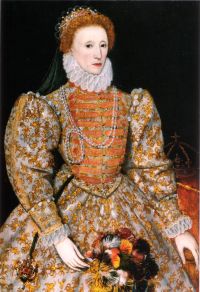
Elizabeth I and the Art of Imperfect Sovereignty
Historical judgment on the personal character of Queen Elizabeth I remains sharply divided, yet there is broad consensus on her extraordinary talent for governance [1]. Observers like John Lord distinguish between her qualities as a woman, which they find lacking in popular appeal, and her profound abilities as a queen, which brought prosperity and prestige to her throne [3]. This dichotomy is central to understanding her reign, which was characterized by a remarkable combination of cautious prudence and decisive energy . However, this political acumen was often powered by what many contemporaries and later historians considered significant personal flaws, most notably a shameless and prolific mendacity that set her apart even in an age of widespread political deceit [2].
Elizabeth’s alleged imperfections were frequently inseparable from her political strengths. Her notable vanity and a demand for admiration, for instance, were linked to a formidable, lion-like spirit that ensured no foreign prince or domestic noble could dominate her will [5]. Similarly, her reliance on expediency over strict morality was, in the view of some analysts, a necessary response to an era rife with conspiracies and political turmoil, where clear ethical guidelines in statecraft were largely absent [6]. Critics who characterize her as merely selfish, shortsighted, or rash struggle to explain how such a ruler could have governed England with undeniable success for more than four decades [4].
Her very identity as a female ruler provided unique strategic advantages. As J. M. Robertson noted, Elizabeth could retreat from political confrontations or yield points to Parliament without the humiliation a male king would have suffered, affording her a flexibility that was key to her sagacity [7]. This ability, coupled with a willingness to mystify and outwit her own ministers as well as foreign statesmen, became a hallmark of her fifty-year rule . While some accounts highlight an unprincipled and haughty nature, it is clear that these traits were enmeshed with the political calculus that defined her reign [9].
Ultimately, Elizabeth's power rested on a deep, cultivated bond with her subjects. She successfully identified her personal glory with the prosperity of the English nation, ruling for the people even if not by them [10]. In her own words, she presented her authority not as a personal ambition but as a divine instrument to defend the kingdom from tyranny and oppression, professing a willingness to die for her subjects' safety [8]. This posture engendered a powerful and enduring public devotion, demonstrating that a monarch could secure loyalty and affection not by being personally faultless, but by being perceived as the unwavering guardian of the national interest [12].
Victoria and the Cultivation of Moral Authority
The reign of Queen Victoria represented a significant evolution in the performance of monarchy, shifting the basis of its authority from political cunning to personal virtue. Unlike the formidable and calculating figure of Elizabeth I, Victoria was celebrated not as a great or powerful stateswoman, but as a sovereign of immense good sense and unimpeachable moral character [11]. Her long reign was framed by a simple childhood resolution—"I will be good"—a principle she was seen to have tenaciously upheld, setting a high standard of duty and faithfulness for the entire nation [13]. This transformation positioned the monarch as a moral anchor in a rapidly changing society.
This idealized image of personal rectitude fostered a profound and widespread public devotion that became a cornerstone of institutional stability. Her fifty-year rule was lauded as a period of unprecedented progress, overseen by a monarch whose symbolic mantle was perceived to have no stain upon it [16]. Victoria’s personal life, far from being a private matter, became a source of national connection. Her experiences as a wife and mother, and especially the deep sorrows of her domestic life, were seen not as weakening her but as deepening her sympathies and knitting her in fellowship with her subjects [17]. This relatability transformed the crown from a distant seat of power into a cherished national institution.
This approach stands in stark contrast to the methods of earlier monarchs. Where Elizabeth I commanded loyalty through a mixture of awe-inspiring majesty, strategic ambiguity, and a carefully projected identity as the nation's protector [15], Victoria secured it through affection and gratitude for her perceived moral example . As the 19th century progressed, thinkers like Justin McCarthy posited that the English Crown's survival depended less on its active role in governance and more on its symbolic function as an object of popular affection and custom [14]. Victoria’s reign demonstrated the power of this model, proving that a monarch could wield immense influence not through direct political intervention, but by embodying the nation's highest moral ideals.
Modern Monarchy Between Scrutiny and Survival
Contemporary monarchy confronts an environment of unprecedented scrutiny, where the traditional foundations of authority are no longer sufficient. The simple fact of being born to rule holds little intrinsic claim to public reverence [19]. The institution's legitimacy is now perceived as hanging by a "tender thread," contingent not only on the monarch's life but, more critically, on their conduct and public perception [18]. In the modern age, the distinction between the private and public lives of royalty has all but vanished; personal matters such as marriages and deaths are events of national concern, making every royal act a public one [25].
This intense transparency means that aloofness or perceived self-interest poses an existential threat. Writing in the 18th century, Montesquieu presciently warned that a monarchy risks destruction when the prince isolates the state within his own court and person, losing the love of his people [21]. This danger is magnified today, where a royal house that appears disconnected from democratic aspirations, or believes a gulf separates it from ordinary humanity, invites instability [23]. The personal conduct of the monarch is paramount, as behavior that fails to command respect can drag down an entire dynasty [24]. Furthermore, open discord within the royal family is now seen as a more corrosive threat to the institution than any external democratic critique [20].
For the institution to endure, it must adapt to these modern realities. The throne has transitioned from a feudal seat of power to a form of public magistracy [22]. Its survival may depend on its ability to be, as Laurence Housman suggested, profoundly democratic—not by yielding to political factions, but by embracing a natural and human quality [27]. This requires adherence to constitutional limits, where the sovereign acts for the nation's benefit while ministers bear political responsibility, thus shielding the crown from censure [28, 29]. In this model, the monarch's role is to serve as a unifying expression of the collective nation, rather than a vehicle for individual or commercial interests [26].
Ultimately, the modern monarchy's viability rests upon the genuine affection of the populace. As the 18th-century writer Junius argued, the dignity of the crown and the honor of parliament are hollow concepts when compared to the "heart-felt affections of the people" [30]. A sovereign's security is found not in the exercise of despotic power but in the trust and love of their subjects . The future of the crown hinges on its capacity to balance inherent dignity with demonstrated public service, proving its worth not through inherited right but through a steadfast commitment to national well-being.
The history of monarchy is a continuous story of adaptation, defined by the persistent tension between the individual ruler and their symbolic office. This survey reveals a clear trajectory in the strategies employed to manage this duality. Elizabeth I mastered her political environment by weaponizing her personal ambiguity and projecting an image of fierce national devotion, securing loyalty through a mix of fear, respect, and sagacity. In a later era, Queen Victoria fortified the throne by cultivating an image of unimpeachable moral and domestic virtue, transforming the crown into a symbol of national propriety and earning the deep affection of her people. Each approach was a response to the unique challenges and expectations of its time, demonstrating the monarchy's capacity for reinvention.
Today, the institution faces its most demanding test. In a world saturated by media and animated by democratic ideals, neither the calculated mystique of an Elizabeth nor the curated moralism of a Victoria is sufficient. The contemporary demand is for transparency, relatability, and a form of authenticity that sits uneasily with the traditions of inherited privilege. The survival of the crown no longer depends on political cunning or a flawless public image, but on a monarch's ability to forge a genuine connection with the populace. The ultimate power now resides with the people, whose heart-felt affection is the final, and perhaps only, true source of monarchical legitimacy.