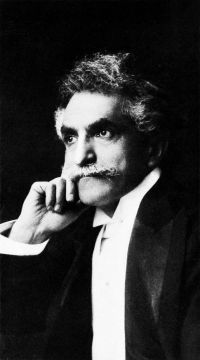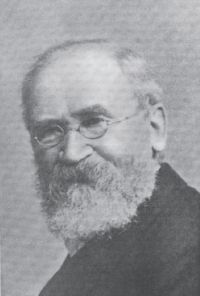
Andrew Martin Fairbairn

Biographical details

Portrait of Andrew Martin Fairbairn Andrew Martin Fairbairn,  1911 Encyclopædia Britannica, Volume 17… (1911)

“ His religion was what he conceived the personal religion of Jesus to have been; and He was to him more a person to be imitated than an authority to be obeyed, rather an ideal to be revered than a being to be worshipped.
Martineau’s mental qualities fitted him to fulfil these high interpretative functions. He had the imagination that invested with personal being and ethical qualities the most abstruse notions. To him space became a mode of divine activity, alive with the presence and illuminated by the vision of God; time was an arena where the divine hand guided and the divine will reigned.
”
Source: Wikisource

Portrait of Andrew Martin Fairbairn Andrew Martin Fairbairn,  The Cambridge Modern History, Volume 2… (1904)

“ In France, where the passion for unity is beginning to work like madness in the brain, Rabelais speaks in his mother tongue the praises of the new learning; Montaigne makes it the vehicle of the new temper and its cultured doubt; Clement Marot uses it to sing the Psalms of the ancient Hebrew race; John Calvin to defend and commend his strenuous faith; while Descartes, born in this century though writing in the next, states his method, defines his problem, and determines the evolution of modern philosophy, in the language of the people as well as in that of the learned. ”
Source: Wikisource

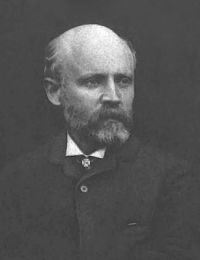
Portrait of Andrew Martin Fairbairn Andrew Martin Fairbairn,  1911 Encyclopædia Britannica, Volume 17… (1911)

“ And though he did not believe in the Incarnation, yet he held deity to be in a sense manifest in humanity; its saints and heroes became, in spite of innumerable frailties, after a sort divine; man underwent an apotheosis, and all life was touched with the dignity and the grace which it owed to its source. The 19th century had no more reverent thinker than Martineau; the awe of the Eternal was the very atmosphere that he breathed, and he looked at man with the compassion of one whose thoughts were full of God. ”
Source: Wikisource

Get perspective with Kwize: daily news enlightened by great literature