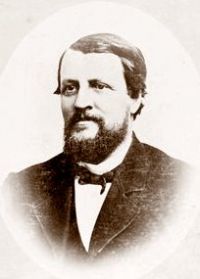
Augustus S. Wilkins and Robert S. Conway

Biographical details

Augustus S. Wilkins and Robert S. Conway 1911 Encyclopædia Britannica (1911)

In his contemporary Lucan we have another example of the faults of a style especially attractive to the young, handled by a youth of brilliant but ill-disciplined powers. The Pharsalia abounds in spirited rhetoric, in striking epigram, in high sounding declamation; but there are no flights of sustained imagination, no ripe wisdom, no self-control in avoiding the exaggerated or the repulsive, no mature philosophy of life or human destiny. Of all the Latin poets he is the least Virgilian. It has been said of him that he corrupted the style of poetry, not less than Seneca that of prose.
Source: Wikisource

Augustus S. Wilkins and Robert S. Conway 1911 Encyclopædia Britannica (1911)

His own style for straightforward simplicity and purity has never been surpassed; and it is not without full reason that Cicero and Caesar are regarded as the models of classical prose. But, while they fixed the type of the best Latin, they did not and could not alter its essential character. In subtlety, in suggestiveness, in many-sided grace and versatility, it remained far inferior to the Greek. But for dignity and force, for cadence and rhythm, for clearness and precision, the best Latin prose remains unrivalled.
It is needless to dwell upon the grammar or vocabulary of Cicero.
Source: Wikisource

Augustus S. Wilkins and Robert S. Conway 1911 Encyclopædia Britannica (1911)

The living Latin for all the higher forms of composition, both prose and verse, was a far nobler language than the living Greek. During the long period of Grecian pre-eminence and literary glory, from Homer to Demosthenes, all the manifold forms of poetry and prose which were invented one after the other were brought to such exquisite perfection that their beauty of form and grace of language were never afterwards rivalled by Latin or any other people.
Source: Wikisource

Get perspective with Kwize: daily news enlightened by great literature