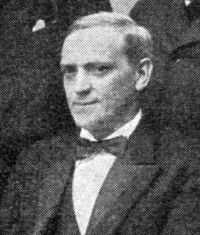
Harald Westergaard

Biographical details

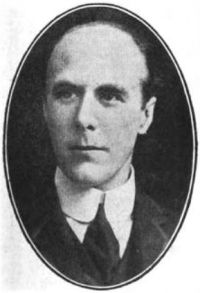
Portrait of Harald Westergaard Harald Westergaard,  Economic Development in Denmark Before and During the World War (1922)

“ In the eyes of most people old age is a very remote condition, and those who are not unusually provident are far more attracted by matters of immediate concern. Insurance against sickness is to them a far more vital matter than an old-age pension; and as soon as a man has married and settled down he thinks first of providing for his wife and children. This is so much more the case because the annuities obtained seem to most people too small to compensate for the necessary sacrifices.
The discussion of old-age pensions was, nevertheless, continued on the basis of the government proposal.
”
Source: Wikisource

Portrait of Harald Westergaard Harald Westergaard,  Economic Development in Denmark Before and During the World War (1922)

“ For the economic life of Denmark it was of still greater importance—just as the separation of Norway from Denmark in 1814—in that it gave industry a strong impetus for attacking and solving the many problems which pressed upon it within the country's narrowed boundaries. As a result certain industries grew so rapidly that they not only supplied the home market, but also secured a foothold in the world market. The task was further aided by a redistribution of the population, which, as stated above, had rapidly increased throughout the nineteenth century. ”
Source: Wikisource

Portrait of Harald Westergaard Harald Westergaard,  Economic Development in Denmark Before and During the World War (1922)

“ Some three hundred years ago a French writer, Pierre d'Avity, in reviewing the living conditions and the character of the natives of various countries, said of the Jutlanders: 'They are a strong people who eat and drink a great deal; they are provident and clever and cling to their own; they are quarrelsome, suspicious, and irascible, and fight stubbornly in defence of their opinions.' If this judgement is true to fact, it is difficult to think of the Danish peasants of that day as members of a cowed and oppressed class, in spite of all the burdens that were imposed upon them. ”
Source: Wikisource

Get perspective with Kwize: daily news enlightened by great literature