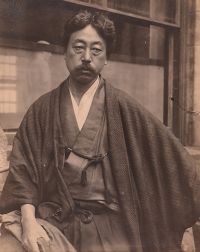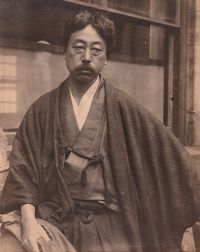
Kakuzo Okakura

Biographical details

Portrait of Kakuzo Okakura Kakuzo Okakura The Book of Tea

Nothing is more hallowing than the union of kindred spirits in art. At the moment of meeting, the art lover transcends himself. At once he is and is not. He catches a glimpse of Infinity, but words cannot voice his delight, for the eye has no tongue. Freed from the fetters of matter, his spirit moves in the rhythm of things. It is thus that art becomes akin to religion and ennobles mankind. It is this which makes a masterpiece something sacred. In the old days the veneration in which the Japanese held the work of the great artist was intense.
Source: Gutenberg

Portrait of Kakuzo Okakura Kakuzo Okakura The Book of Tea

A master has always something to offer, while we go hungry solely because of our own lack of appreciation.
To the sympathetic a masterpiece becomes a living reality towards which we feel drawn in bonds of comradeship. The masters are immortal, for their loves and fears live in us over and over again. It is rather the soul than the hand, the man than the technique, which appeals to us,—the more human the call the deeper is our response. It is because of this secret understanding between the master and ourselves that in poetry or romance we suffer and rejoice with the hero and heroine.
Source: Gutenberg

Portrait of Kakuzo Okakura Kakuzo Okakura The Book of Tea

On the day destined for his self-immolation, Rikiu invited his chief disciples to a last tea-ceremony. Mournfully at the appointed time the guests met at the portico. As they look into the garden path the trees seem to shudder, and in the rustling of their leaves are heard the whispers of homeless ghosts. Like solemn sentinels before the gates of Hades stand the grey stone lanterns. A wave of rare incense is wafted from the tea-room; it is the summons which bids the guests to enter. One by one they advance and take their places.
Source: Gutenberg

Get perspective with Kwize: daily news enlightened by great literature