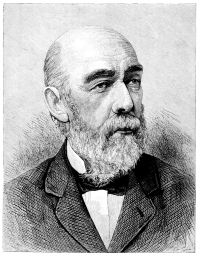
T. Eric Peet

Biographical details

T. Eric Peet Rough Stone Monuments and Their Builders

The whole tomb is covered with a low mound of earth. In the great upright slab which forms the inner end of the chamber is a circular hole rather above the centre.
It is not the plan of this tomb, but the size, that compels the admiration of the beholder. He stands, as it were, within a vast cave lighted only from its narrow end, the roof far above his head. The rough surface of the blocks lends colour to the feeling that this is the work of Nature and not of man.
Source: Gutenberg

T. Eric Peet Rough Stone Monuments and Their Builders

To British readers it is unnecessary to give any justification for the comparatively full treatment accorded to the monuments of Great Britain and Ireland. Malta and Sardinia may perhaps seem to occupy more than their due share of space, but the usurpation is justified by the magnificence and the intrinsic interest of their megalithic buildings. Being of singularly complicated types and remarkably well preserved they naturally tell us much more of their builders than do the simpler monuments of other larger and now more important countries.
Source: Gutenberg

T. Eric Peet Rough Stone Monuments and Their Builders

One thing alone is clear, that in certain places, such as Malta and Sardinia, the megalithic people were not averse to reproducing in the solid rock the forms which they more usually erected with large stones above ground. The finest instance of this is the Halsaflieni hypogeum in Malta, where the solid rock is hewn out with infinite care to imitate the form and even the details of surface building.
Source: Gutenberg

Get perspective with Kwize: daily news enlightened by great literature