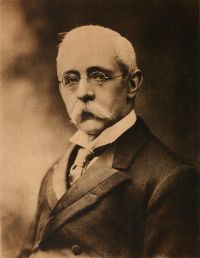
Thomas Watters

Biographical details

Thomas Watters,  Lao-tzu, A Study in Chinese Philosophy

“ The last characteristic of Lao-tzŭ’s teachings to which I shall allude at present is that they are all imbued with a genial and sympathetic spirit, regarding man not merely as an individual, and not merely as a member of human society, but also a citizen of the universe, if I may use the expression. Modesty, gentleness, forbearance, and self-denial are his constant watchwords. He ever inculcates on man, especially in his highest development, a sympathy not only with his fellow men, but also with all the creatures of the earth, and even with inanimate nature. ”
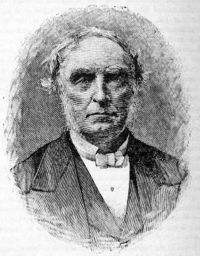
Source: Gutenberg

Thomas Watters,  Essays on the Chinese Language (1889)

“ Thus it was the opinion of the celebrated Golius, "a man of divine candour and a thorough Orientalist if ever there was such," that "the Chinese language was not derived from the old speech of mortals, but was constructed by the skill and genius of some philosopher"—"invented all at once by some clever man to establish oral intercourse among the many different nations who inhabited that great country which we call China." It seems strange to us now that a man like Leibniz should have given his assent to so wayward a fancy, and perpetuated it in one of his best philosophical works. ”
Source: Wikisource

Thomas Watters,  Essays on the Chinese Language (1889)

“ The rules for private and public life, the social and political institutions of China, handed down from age to age, surviving dynastic overthrows and popular convulsions, have exercised a great and lasting influence not only on the people which lived in the fostering shade of the Son of Heaven, but also on the tribes and nations not blessed to dwell within the circle of his potent virtue but beyond the limits of the Flowery Land. In its own sphere, which is not a small one, the Chinese nation has done much, though not unmixed good. ”
Source: Wikisource

Get perspective with Kwize: daily news enlightened by great literature