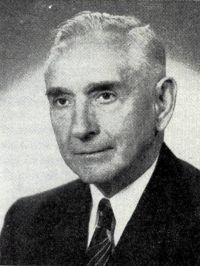
Adam S. Bennion

Adam S. Bennion

Summary

Portrait of Adam S. Bennion Adam S. Bennion Principles of Teaching

The final test of our teaching, therefore, is just like this: Because of our instruction, does the child live differently here and now, as a child, in all his multiform relations in the home, the school, the church, the community, and in his own personal life? Are the lessons we teach translated continuously into better conduct, finer acts, and stronger character, as shown in the daily run of the learner's experience?
Source: Gutenberg

Portrait of Adam S. Bennion Adam S. Bennion Principles of Teaching

Born with the capacity to do, he behaves to his own blessing or condemnation. There is no such thing as static life. To the teacher is given the privilege of pointing to the higher life. He is the gardener in the garden of life. His task is to plant and to cultivate the flowers of noble thoughts and deeds rather than to let the human soul grow up to weeds. This purpose becomes all the more significant when we realize that the effects of our teaching are not only to modify a life here of three-score and ten—they are impressions attendant throughout eternity.
Source: Gutenberg

Portrait of Adam S. Bennion Adam S. Bennion Principles of Teaching

A student with whom the writer talked a short time ago remarked that she could always tell whether the day's class was going to be interesting under a particular teacher as soon as she caught the mood in which she entered the classroom. Half-heartedness, indifference, and unpleasantness are all negative—they neither attract nor stimulate. Interest and enthusiasm are the sunshine of the classroom—they are to the human soul what the sun's rays are to the plant.
Source: Gutenberg

Get perspective with Kwize: daily news enlightened by great literature