Summary

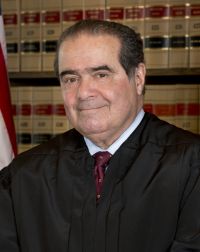
Portrait of Antonin Scalia Antonin Scalia California v. Acevedo — Opinion of the Court

Even if the warrant requirement does inconvenience the police to some extent, that fact does not distinguish this constitutional requirement from any other procedural protection secured by the Bill of Rights. It is merely a part of the price that our society must pay in order to preserve its freedom. Thus, in a unanimous opinion that relied on both Johnson and Chadwick, Justice Stewart wrote:
"Moreover, the mere fact that law enforcement may be made more efficient can never by itself justify disregard of the Fourth Amendment.
Source: Wikisource

Portrait of Antonin Scalia Antonin Scalia California v. Acevedo — Opinion of the Court

And, even when the police have a warrant or an exception applies, once the police possess probable cause, the extent to which they are more or less certain of the contents of a container has no bearing on their authority to search it.
To the extent there was any "anomaly" in our prior jurisprudence, the Court has "cured" it at the expense of creating a more serious paradox. For, surely it is anomalous to prohibit a search of a briefcase while the owner is carrying it exposed on a public street yet to permit a search once the owner has placed the briefcase in the locked trunk of his car.
Source: Wikisource

Portrait of Antonin Scalia Antonin Scalia California v. Acevedo — Opinion of the Court

On the other hand, I agree with the Court that it would be anomalous for a locked compartment in an automobile to be unprotected by the "general requirement" of a prior warrant, but for an unlocked briefcase within the automobile to be protected. I join in the judgment of the Court because I think its holding is more faithful to the text and tradition of the Fourth Amendment, and if these anomalies in our jurisprudence are ever to be eliminated that is the direction in which we should travel.
Source: Wikisource

Get perspective with Kwize: daily news enlightened by great literature