Summary

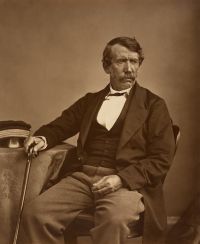
Portrait of David Livingstone David Livingstone The Last Journals of David Livingstone…

The Arabs say that the Manyuema now understand that every gunshot does not kill; the next thing they will learn will be to grapple in close quarters in the forest, where their spears will outmatch the guns in the hands of slaves, it will follow, too, that no one will be able to pass through this country; this is the usual course of Suaheli trading; it is murder and plunder, and each slave as he rises in his owner's favour is eager to show himself a mighty man of valour, by cold-blooded killing of his countrymen: if they can kill a fellow-nigger, their pride boils up.
Source: Gutenberg

Portrait of David Livingstone David Livingstone The Last Journals of David Livingstone…

Moenembagg said, "Your people must not steal, we never do," which is true: blood in a small quantity was then conveyed from one to the other by a fig-leaf. "No stealing of fowls or of men," said the chief: "Catch the thief and bring him to me, one who steals a person is a pig," said Mohamad. Stealing, however, began on our side, a slave purloining a fowl, so they had good reason to enjoin honesty on us! They think that we have come to kill them: we light on them as if from another world: no letters come to tell who we are, or what we want.
Source: Gutenberg

Portrait of David Livingstone David Livingstone The Last Journals of David Livingstone…

In some parts clay schists appear, which look as if they had been fused or were baked by intense heat.
The pugnacious spirit is one of the necessities of life. When people have little or none of it, they are subjected to indignity and loss. My own men walk into houses where we pass the nights without asking any leave, and steal cassava without shame. I have to threaten and thrash to keep them honest, while if we are at a village where the natives are a little pugnacious they are as meek as sucking doves.
Source: Gutenberg

Get perspective with Kwize: daily news enlightened by great literature