Summary

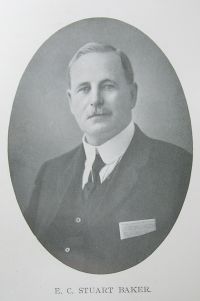
Portrait of Edward Charles Stuart Baker Edward Charles Stuart Baker The Fauna of British India, including Ceylon and Burma… (1922)

Where evolution and isolation have evolved forms which are definitely divided from all others by some characteristic which is not one merely of degree, I have treated them as distinct species.
In India we are constantly meeting with the most intricate cases of subspecific variation, and a study of birds which admits the recognition of these geographical races and the wisdom of naming them affords infinitely greater interest both to the field and to the scientific worker than does the easier method of lumping them all together.
Source: Wikisource

Portrait of Edward Charles Stuart Baker Edward Charles Stuart Baker The Fauna of British India, including Ceylon and Burma… (1922)

Blanford died in 1905. For twenty-seven years he had been a member of the Indian Geological Society and had acquired a wide and deep knowledge of the geology of that great Empire. But he was a man of the utmost width of scientific interest. During his many journeys he kept a keen eye on the fauna of British India and it was this firsthand knowledge that enabled him so successfully to complete the great work begun by Mr. Gates. Dr. Blanford was an indefatigable worker and everything that he wrote was of the highest order of merit, marked by thoroughness and accuracy.
Source: Wikisource

Portrait of Edward Charles Stuart Baker Edward Charles Stuart Baker The Fauna of British India, including Ceylon and Burma… (1922)

It is true that birds cannot be classified according to the eggs they produce, but at the same time it is equally true that a bird's egg may be a valuable clue to show us where we should expect to find its nearest allies or, on the other hand, may cause us to suspect that it should be removed from amongst those with which it is now placed!.
Source: Wikisource

Get perspective with Kwize: daily news enlightened by great literature