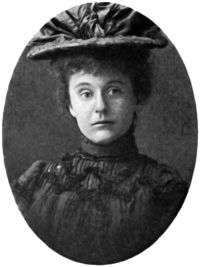
Frances Theodora Parsons

Frances Theodora Parsons

Summary

Portrait of Frances Theodora Parsons Frances Theodora Parsons,  How to Know the Ferns (1899)

“ Everywhere I notice the thin, spreading frond and withered fruit-cluster of the Rattlesnake Fern, in my experience the most ubiquitous member of the Botrychium group. More or less frequent are graceful crowns of the Spinulose Shield Fern, slender shining fronds of Christmas Fern, dull-green groups of Silvery Spleenwort and stately plumes of Goldie's Fern. As we draw near the wood's border, where the yellow sunlit fields of grain shine between the tall maple shafts, we push aside umbrella-like Brakes. At the very limits of the woods, close against the rails, grows the sweet-scented Dicksonia. ”
Source: Wikisource

Portrait of Frances Theodora Parsons Frances Theodora Parsons,  How to Know the Ferns

“ In November we notice chiefly the evergreen ferns. The great round fruit-dots of the Polypody show distinctly through the fronds as they stand erect in the sunlight. A sober green, looking as though it were warranted fast, is the winter dress of the Evergreen Wood Fern. The Christmas Fern, bright and glossy, reminds one that the holiday season is not distant. These three plants are especially conspicuous in our late autumn woods. Their brave and cheerful endurance is always a delight. Later in the season the curled pinnæ of the Polypody seem to be making the best of cold weather. ”
Source: Gutenberg

Portrait of Frances Theodora Parsons Frances Theodora Parsons,  How to Know the Ferns

“ To me the greatest charm the ferns possess is that of their surroundings. No other plants know so well how to choose their haunts. If you wish to know the ferns you must follow them to Nature's most sacred retreats. In remote, tangled swamps, overhanging the swift, noiseless brook in the heart of the forest, close to the rush of the foaming waterfall, in the depths of some dark ravine, or perhaps high up on mountain-ledges, where the air is purer and the world wider and life more beautiful than we had fancied, these wild, graceful things are most at home. ”
Source: Gutenberg

Get perspective with Kwize: daily news enlightened by great literature