Frond

Definition and stakes

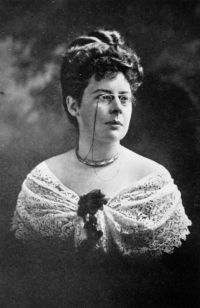
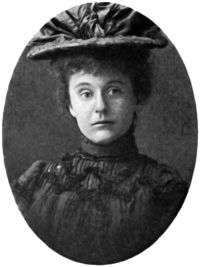
Portrait of Elizabeth Rundle Charles Elizabeth Rundle Charles,  The black ship: with other allegories and parables

“ For, although I was but a little fern, many of my race were among the lords of the forest. Their roots spread into magnificent curved pedestals; their stems rose, decorated, and erect as the palms, to the height of the tallest trees; and their fronds expanded into ribbed and fretted roofs, beneath which hundreds like me could find shade and shelter, yet every frond as delicately fringed and edged as any of ours.
I thought—"These are my elder sisters. One day I shall grow like them."
”
Source: Gutenberg

Edward Forbes,  Memoirs of the Geological Survey of Great Britain (1846)

“ The old frond, which is exceedingly brittle, is broken by accident and the branches, continuing to live, push out young shoots from all sides. Many minute pieces that I have exa-mined, were as vigorous as those of larger size, but they were certainly not seedlings, and appeared to me to be broken branches, all having a piece of old frond from which the young shoots sprung. ”
Source: Wikisource

Portrait of Frances Theodora Parsons Frances Theodora Parsons,  How to Know the Ferns

“ A frond is simple when it consists of an undivided leaf such as that of the Hart's Tongue or of the Walking Leaf (Fig. 1) .
A frond is pinnatifid when cut so as to form lobes extending half-way or more to the midvein (Fig. 2) .
[Pg 30]
A frond is once-pinnate when the incisions extend to the midvein (Fig. 3) . Under these conditions the midvein is called the rachis (a) , and the divisions are called the pinnæ (b) .
A frond is twice-pinnate when the pinnæ are cut into divisions which extend to their midveins (Fig. 4) . These divisions of the pinnæ are called pinnules (a) .
Fig. 4
Fig.
”
Source: Gutenberg

Get perspective with Kwize: daily news enlightened by great literature