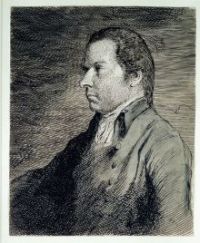
Francis Douce

Francis Douce

Summary

Portrait of Francis Douce Francis Douce The Dance of Death

Death leading the old man, followed by a child; the fool; the wise man, as an astrologer, led by Death. On the spectator’s left hand, Death bringing a man before a judge; with the motto, “The greatest judge that sits in honour’s seat, must come to grave, where’t boots not to intreate.” A man and woman in a brothel, Death behind; with the motto, “Leave, wanton youth, thou must no longer stay; if once I call all mortals must obey.” On the opposite side, the Miser and Death; the motto, “Come, worldling, come, gold hath no power to save, leave it thou shalt, and dance with me to grave.”
Source: Gutenberg

Portrait of Francis Douce Francis Douce The Dance of Death

It is impossible to exceed the beauty and skill that are manifested in this fine piece of art. The figures are, a king, queen, warrior, a young woman, a monk, and an infant, all of whom most unwillingly accompany Death in the dance. The despair of the king, the dejection of the queen, accompanied by her little dog, the terror of the soldier who hears the drum of Death, the struggling of the female, the reluctance of the monk, and the sorrow of the poor infant, are depicted with equal spirit and veracity. The original drawing is in the public library at Basle, and ascribed to Holbein.
Source: Gutenberg

Portrait of Francis Douce Francis Douce The Dance of Death

THE MISER. Death has burst into his strong room, where he is sitting among his chests and bags of gold, and, seated on a stool, deliberately collects into a large dish the money on the table which the Miser had been counting. In an agony of terror and despair, the poor man seems to implore forbearance on the part of his unwelcome visitor.
Source: Gutenberg

Get perspective with Kwize: daily news enlightened by great literature