Summary

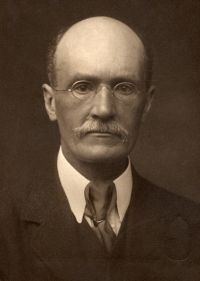
Portrait of Gilbert Murray Gilbert Murray The League of Nations and the democratic idea

To educate a man for the Army; to train him in a walk of life which, to those who follow it, seems by far the most thrilling and glorious in the world; to accustom him to the thought that war, when it comes, will bring him a chance to use all his powers, to serve his country, to rise in his profession, and to leap perhaps from obscurity to the most dazzling form of glory that humanity knows: to do all this and then expect him not to desire war is surely to demand too much of human nature.
Source: Wikisource

Portrait of Gilbert Murray Gilbert Murray The League of Nations and the democratic idea

The plain fact is that the men who are caught in the whirlpool of this War are too good for the life they now live. They are too good to be used for cannon-fodder, too good to be trained to drive bayonets into one another's intestines or stamp with nailed boots on one another's face. It is not only the pacifist and the eccentric who is craving in his heart for a gentler world. It is not only the thoughtful soldier, bent beneath a burden of intolerable suffering, who is torn by a long conflict between duties, in which he is forced to accept the most hateful as the most compelling.
Source: Wikisource

Portrait of Gilbert Murray Gilbert Murray The League of Nations and the democratic idea

Every thinking person knows that if the states of Europe continue to practise war their doom is sealed. The precipice is visible, straight before us; are we men, with the power to think and check ourselves and turn aside, or are we as the Gadarene swine, incapable of turning? The situation is in some ways like that of the drunkard or the drug-taker who knows that, saved for once, he must from henceforth either abstain or perish. But in one way it is much more difficult. It is complicated by the constant suspicion that, if we abstain from war, other nations will not.
Source: Wikisource

Get perspective with Kwize: daily news enlightened by great literature