“ When suffering begins with exuberant sunshine and mornings like a flourish of trumpets, it is even more terrible because it is further away.... Suffering is more. It is unlike anything else. It is regular, steady as the breath, amazing, tolerable, and it is not the last word you say, it is also the first word; it follows its mortal, monotonous course, and you realize it has no name: to live is to suffer.Is it human misery? No, human suffering. Stammering nights, groping footsteps. ”
Human suffering
Definition and stakes
The theme of “human suffering” has been addressed by authors such as Émile Zola, James Allen, Friedrich Nietzsche, Joseph Lewis and Arthur Schopenhauer. It is often associated with terms like misery, disease, sorrow, poverty and soul.
Quotes about “human suffering”
Multiple, Poems That Every Child Should Know (1904)
“ And whelm him o'er! Such fate to suffering worth is given, Who long with wants and woes has striven, By human pride or cunning driven To misery's brink, Till wrenched of every stay but Heaven, He, ruined, sink! ”
 Émile Zola,
The Three Cities Trilogy: Lourdes…
Émile Zola,
The Three Cities Trilogy: Lourdes…
“ Such was the mystical explanation of that election of suffering, the raison d’etre of that being who was so harshly separated from her fellows, weighed down by disease, transformed into the pitiable field of every human affliction. ”
 Ann S. Stephens,
The Gold Brick
Ann S. Stephens,
The Gold Brick
“ You know that human misery has been crowded there in masses, without air to breathe, or such light as God gives to his meanest animal. You think of this till the hollows of the mountains seem gorged with groans, and the cry of suffering souls comes up through the very pores of the earth, making the wild flowers tremble beneath the doleful misery that grew desperate beneath their roots. ”
James Frazer, The Golden Bough — Chapter 64:… (1922)
“ The consideration of human suffering is not one which enters into the calculations of primitive man. ”
William Sidney Walker, Gustavus Vasa
“ Thou hast not yet the height of woe attain'd, Nor every cup of human sorrow drain'd.⎧ Thy path of suffering has been trod alone;⎨ No following friend, no consort, hast thou known,⎩ To double all thy sorrows with their own: No artful foe has doom'd thy humble name To public enmity, or public shame; [Pg 180] And last, and worst of all, the pangs of woe Hell can inflict, or vengeful Heaven bestow, Relentless Conscience has not shed on thee Her poison'd darts,—her stings of misery! Thy virtue shone thro' the dim vale of earth, And toils and dangers proved thy blameless worth. ”
 Herbert Spencer,
Essays on Education and Kindred Subjects
Herbert Spencer,
Essays on Education and Kindred Subjects
“ And it is from this cause that in human beings bodily suffering expresses itself not only in contortions, but in shrieks and groans—that in anger, and fear, and grief, the gesticulations are accompanied by shouts and screams—that delightful sensations are followed by exclamations—and that we hear screams of joy and shouts of exultation. ”
William James, The Varieties of Religious Experience…
“ We strew it with our blunders, our misdeeds, our lost opportunities, with all the memorials of our inadequacy to our vocation. And with what a damning emphasis does it then blot us out! No easy fine, no mere apology or formal expiation, will satisfy the world's demands, but every pound of flesh exacted is soaked with all its blood. The subtlest forms of suffering known to man are connected with the poisonous humiliations incidental to these results.And they are pivotal human experiences. A process so ubiquitous and everlasting is evidently an integral part of life. ”
George G. Lyon, Popular Science Monthly (1884)
“ So that suffering, physical and spiritual, is the cry for mercy from the depths of transgression, and is the sign of hope and the assurance of a "present help in time of need," unless the desire of sufferers exceeds the measure of the divine and human compassion. ”
 Mrs. Humphry Ward,
Robert Elsmere
Mrs. Humphry Ward,
Robert Elsmere
“ The pure human pity of the story—the contrast between the innocence and the pain of the sufferer—seemed to be more than they could bear. And there was no comforting sense of a jugglery by which the suffering was not real after all, and the sufferer not man but God. ”
James J. Walsh, Health Through Will Power
“ For a great many people have to suffer severely and without any prospect of relief—none of us quite escape the necessity of suffering—and as some one has said, all human life, inasmuch as there is death in it, must be considered a tragedy. ”
 Arthur Schopenhauer,
The Essays of Arthur Schopenhauer…
Arthur Schopenhauer,
The Essays of Arthur Schopenhauer…
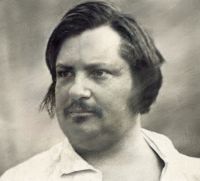
“ In one of them, this misery is immediately present to us. We feel it in our own person, in our own will which, imbued with violent desires, is everywhere broken, and this is the process which constitutes suffering. The result is that the will increases in violence, as is shown in all cases of passion and emotion; and this increasing violence comes to a stop only when the will turns and gives way to complete resignation, in other words, is redeemed. ”
 Honoré de Balzac,
Father Goriot
(1835)
Honoré de Balzac,
Father Goriot
(1835)
“ Perhaps it is only human nature to inflict suffering on anything that will endure suffering, whether by reason of its genuine humility, or indifference, or sheer helplessness. ”
 Friedrich Nietzsche,
HUMAN, ALL TOO HUMAN, 'A Book For Free Spirits' Part I
(1909)
Friedrich Nietzsche,
HUMAN, ALL TOO HUMAN, 'A Book For Free Spirits' Part I
(1909)
“ The tragedy consists in the fact that we cannot believe those dogmas of religion and metaphysics, if we have strict methods of truth in heart and brain : on the other hand, mankind has, through development, become so delicate, irritable and suffering, that it has need of the highest means of healing and consolation ; ”
Francis Jacox, Scripture texts illustrated by general literature (1871)
“ But we can bear each day and night of pain, only by taking each by itself. We can break each rod, but not the bundle.” And the sufferer, in real great suffering, is well described as turning to the wall in blank despair, when he looks too far on. ”
 Dorothy Canfield Fisher,
The home-maker
(1924)
Dorothy Canfield Fisher,
The home-maker
(1924)
“ No circle in any hell would have contained more concentrated suffering than was crowded into his every conscious moment—horrible, brute, physical suffering, tearing at every nerve, suffering that degraded him, that left him no humanity. ”
 Eugène Sue,
The Mysteries of Paris, illustrated with etchings…
Eugène Sue,
The Mysteries of Paris, illustrated with etchings…
“ What gnawing grief, what hidden sorrows have you not been called upon to endure, from the death of your mother to the birth of your child! Who would ever believe such ills could reach one so envied, so admired, and so calculated to enjoy and impart happiness to others?""Oh, my lord, there are some sorrows so deep, so unapproachable, that for worlds we would not even have them suspected; and the severest increase of suffering would arise from the very doubt of our being the enviable creatures we are believed to be." ”
Robert F. Horton, The Expositor's Bible: The Book of Proverbs
“ Who is it that lives in an atmosphere of perpetual strife and loud quarrellings? "Whose is groaning?"—that sustained sigh of desponding and irremediable misery. "Whose are causeless wounds?"—not only the bruise and the gash which result from furious sparrings or unforeseen falls, but also wounds of the spirit, self-loathing, and shame, the thought of what might have been, the realization of a ruined home, and of suffering wife and little ones, and the conviction that the evil can now never be undone. ”
 Sir Edwin Arnold,
The Light of Asia
Sir Edwin Arnold,
The Light of Asia
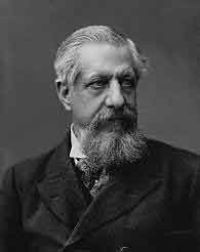
“ Oh! suffering world, Oh! known and unknown of my common flesh, Caught in this common net of death and woe, And life which binds to both! I see, I feel The vastness of the agony of earth, The vainness of its joys, the mockery Of all its best, the anguish of its worst; Since pleasures end in pain, and youth in age, And love in loss, and life in hateful death, And death in unknown lives, which will but yoke Men to their wheel again to whirl the round Of false delights and woes that are not false. ”
 Walter Pater,
Marius the Epicurean — Volume 2
Walter Pater,
Marius the Epicurean — Volume 2
“ And I had come across the incident just when it would figure to me as the very symbol of our poor humanity, in its capacities for pain, its wretched accidents, and those imperfect sympathies, which can never quite identify us with one another; the very power of utterance and appeal to others seeming to fail us, in proportion as our sorrows come home to ourselves, are really our own. We are constructed for suffering! ”
 William G. T. Shedd,
Sermons to the Natural Man
William G. T. Shedd,
Sermons to the Natural Man
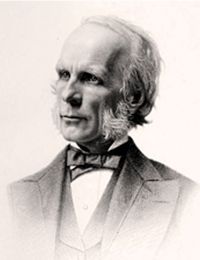
“ On the contrary, should I not be the most wretched of mortals? Would not this self-knowledge be pure living torment? And yet the misery springs entirely out of the sin. There is nothing arbitrary or wanton in the suffering. ”
“ When you find yourself suddenly precipitated into an abyss of moral suffering, after the terrible shock which stuns, which bruises even the most delicate fibres of your heart, that which is, above all, most frightful, is this sudden night, black and profound, of the soul, which does not permit one to see even the thousand wounds by which it is torn. ”
Mary F. Porter, Applied Psychology for Nurses
“ Her attitude is as sick as her body. How could it be otherwise?Look about you from an aching mind and body, after days of suffering and sleeplessness, and unless you are a rare person and have a soul that sees the sunshine back of everything—you will find the world a place of torture. Look out from despair and loss of the ones you love best, or from failure of will to meet disaster, and everybody may be involved in bringing about your suffering, or in effecting your disgrace. ”
An Invalid, Life in the sick-room (1844)
“ Nothing, perhaps, has impressed me so deeply as the clear view I have of almost all, if not quite the whole, of the suffering I have witnessed being the consequence of vice or ignorance. But when my heart has sickened at the sight, and at the thought of so much gratuitous pain, it has grown strong again in the reflection that, if unnecessary, this misery is temporary,—that the true ground of mourning would be if the pain were not from causes which are remediable. ”
 Algernon Charles Swinburne,
Essays and Studies
(1875)
Algernon Charles Swinburne,
Essays and Studies
(1875)
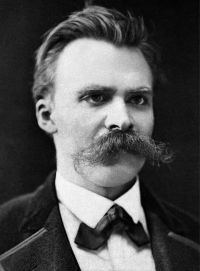
“ With the clamour and horror yet in our ears of that raging eloquence in which the sufferer flings into the faces of prosperous men the very flame and hell-fire of his suffering, it needed no less than this to leave the mind exalted and reconciled. ”
 Friedrich Wilhelm Nietzsche,
Beyond Good and Evil
Friedrich Wilhelm Nietzsche,
Beyond Good and Evil
“ The discipline of suffering, of GREAT suffering—know ye not that it is only THIS discipline that has produced all the elevations of humanity hitherto? The tension of soul in misfortune which communicates to it its energy, its shuddering in view of rack and ruin, its inventiveness and bravery in undergoing, enduring, interpreting, and exploiting misfortune, and whatever depth, mystery, disguise, spirit, artifice, or greatness has been bestowed upon the soul—has it not been bestowed through suffering, through the discipline of great suffering? ”
Sir Edwin Arnold,
The Light of Asia
“ The body by the mind being thus stripped For glory of much suffering, and the bliss Which they shall win—say holy books—whose woe Shames gods that send us woe, and makes men gods Stronger to suffer than hell is to harm. Whom sadly eyeing spake our Lord to one, Chief of the woe-begones: "Much-suffering sir These many moons I dwell upon the hill— Who am a seeker of the Truth—and see My brothers here, and thee, so piteously Self-anguished; wherefore add ye ills to life Which is so evil?" ”
Baron George Gordon Byron Byron, Childe Harold's Pilgrimage
“ All suffering doth destroy, or is destroyed, Even by the sufferer; and, in each event, Ends:—Some, with hope replenished and rebuoyed, Return to whence they came—with like intent, And weave their web again; some, bowed and bent, Wax grey and ghastly, withering ere their time, And perish with the reed on which they leant; Some seek devotion, toil, war, good or crime, According as their souls were formed to sink or climb. ”
 Marah Ellis Ryan,
Told in the Hills: A Novel
Marah Ellis Ryan,
Told in the Hills: A Novel
“ I tell you the greater part of the suffering in the world is caused not by wicked intents and hard hearts, but by the careless desire to shirk unpleasant facts, and the soft-heartedness that will assuage momentary pain at the price of making a life-long cripple, either mentally, morally, or physically. ”
 Émile Durkheim,
The Elementary Forms of the Religious Life
Émile Durkheim,
The Elementary Forms of the Religious Life
“ This is how curing or preventive virtues come to be attributed to the movements which one makes, to the cries uttered, to the blood shed and to the wounds inflicted upon one's self or others; and as these different tortures necessarily make one suffer, suffering by itself is finally regarded as a means of conjuring evil or curing sickness. ”
 Hugh Walpole,
Portrait of a Man with Red Hair…
Hugh Walpole,
Portrait of a Man with Red Hair…
“ Any thought of suffering in others—of poor women in childbirth, of rabbits caught in traps, of dogs poisoned, of children run over or accidentally wounded—these things, if he knew of them, produced an odd sort of sympathetic pain in himself. ”
 Brigham Young,
Journal of Discourses — Volume 9…
Brigham Young,
Journal of Discourses — Volume 9…
“ Do you wish to see the Prophets and servants of God imprisoned, bound in chains, and sacrificed in blood? When you are brought face to face with suffering, you see nothing in it that is desirable, then why cultivate a morbid desire for suffering? ”
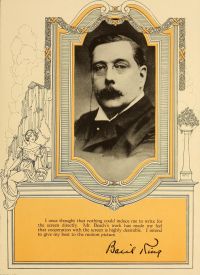 Basil King,
The Street Called Straight
Basil King,
The Street Called Straight
“ Don't you think we make more of suffering than there's any need for? Suffering is nothing much—except, I suppose, the suffering that comes from want. That's tragic. But physical pain—and the things we call trials—are nothing so terrible if you know the right way to bear them. ”
 S. Weir Mitchell,
Westways: A Village Chronicle
S. Weir Mitchell,
Westways: A Village Chronicle
“ Long days of suffering followed as the tortured nerves recorded their far-spread effects in the waste of the body and that failure of emotional control which even the most courageous feel when long under the tyranny of continuous pain. ”
 Don Marquis,
Hermione and her little group of serious thinkers
(1916)
Don Marquis,
Hermione and her little group of serious thinkers
(1916)
“ And nothing but opposition, opposition, opposition now! Only we advanced thinkers know what it is to suffer! To go through fire for our ideals! And what is physical suffering by the side of spiritual suffering? ”
“ Then, also, the tears caused by this suffering flow abundantly, and without any trouble; the soul is disposed to the most touching emotions of pity, or is full of commiseration and of love; in a word, all misfortunes are the cherished and respected sisters of our misfortune. On the contrary, if you suffer for an unworthy cause, your heart is drowned in hatred; your concentrated grief resembles dumb fury which shame bridles with a sharp bit that vanity conceals; envy and hatred gnaw you, but your eyes are dry, and the unhappiness of others can alone draw from you a sad and mournful smile. ”
graf Leo Tolstoy, The Journal of Leo Tolstoi (First Volume…
“ Some one makes me suffer. As soon as I think about myself, about my own suffering, the suffering continues to grow and grow and terror [63] overcomes me at the thought to where it might lead. It suffices to think of the man on account of whom you are suffering, to think about his suffering—and instantly you are healed. Sometimes it is easy when you already love your torturer; but even when it is difficult, it is always possible. ”
 John Cowper Powys,
The Complex Vision
John Cowper Powys,
The Complex Vision
“ Pain and sorrow, both physical and mental, seem to soften the porous shell, so to speak, of the human intelligence, seem to throw back certain shutter-like shards or scales with which it protects its malignant ignorance. ”
 Romain Rolland,
Jean-Christophe Journey's End
Romain Rolland,
Jean-Christophe Journey's End
“ Oh, the agony, the sorrow! Pains of the wounded body, quivering flesh, rotting away in life. The silent torture of hearts under gnawing grief. Children whom no one loves, poor hopeless girls, women seduced or betrayed, men deceived in their friends, their loves, their faith, the pitiable herd of the unfortunates whom life has broken and forgotten!... Not poverty and sickness were the most frightful things to see, but the cruelty of men one to another. ”
 William Cowper Brann,
The Complete Works of Brann, the Iconoclast…
William Cowper Brann,
The Complete Works of Brann, the Iconoclast…
“ It is this very unrest, this heart-hunger that drives a man on to noble deeds—that lifts him out of the gutter where wallow the dull, dumb beasts and places him among the gods. Of suffering and sorrow were born all life's beauty. ”
 Miguel de Unamuno,
Tragic Sense Of Life
Miguel de Unamuno,
Tragic Sense Of Life
“ Suffering is the substance of life and the root of personality, for it is only suffering that makes us persons. ”
 Georg Wilhelm Friedrich Hegel,
The Philosophy of Fine Art, volume 1…
Georg Wilhelm Friedrich Hegel,
The Philosophy of Fine Art, volume 1…
“ Poverty, care, anger, coldness, and indifference, the rage of passion, the obstinate retention of narrow purposes, indications of change and division in the spiritual world, entire dependence on that of Nature—in one word all that is implied in the transitory condition of human life—leaves its indelible, if quite incalculable, expression on the varied surface of the faces of mankind. ”
 Philip Schaff,
Nicene and Post-Nicene Fathers…
(1885)
Philip Schaff,
Nicene and Post-Nicene Fathers…
(1885)
“ For tribulation, distress, persecution, famine, nakedness, peril, cause great suffering to man while in this life. So all these words are implied in the single quotation from the law, where it is said, "For Thy sake we are in suffering." ”
 Friedrich Schiller,
Aesthetical Essays of Friedrich Schiller
Friedrich Schiller,
Aesthetical Essays of Friedrich Schiller
“ But there is still the difficulty to explain why it should be exactly the very feeling of pain,—suffering properly so called,—that in objects of pity attracts us with the greatest force, while, according to those elucidations, a less degree of suffering ought evidently to be more favorable to those causes to which the source of the emotion is traced. ”
Related terms
Authors who wrote about “human suffering”
Émile Zola James AllenFriedrich NietzscheJoseph LewisArthur SchopenhauerAn Invalid
 Georges DuhamelJohn Hasloch PotterMagdeleine Marx
 Catharine Esther BeecherMiguel de Unamuno
 Maurice Maeterlinckgraf Leo Tolstoy
 Fyodor DostoyevskyEugène SueJames J. WalshWilliam G. T. Shedd
 John WesleyHerbert Spencer
 John Ruskin