Summary

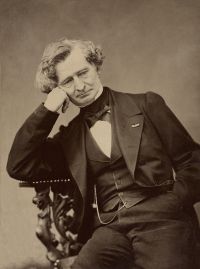
Portrait of Hector Berlioz Hector Berlioz The Orchestral Conductor: Theory of His Art

The most formidable, to my thinking, is the conductor of the orchestra. A bad singer can spoil only his own part; while an incapable or malevolent conductor ruins all. Happy indeed may the composer esteem himself when the conductor into whose hands he has fallen is not at once incapable and inimical; for nothing can resist the pernicious influence of this person. The most admirable orchestra is then paralyzed, the most excellent singers are perplexed and rendered dull; there is no longer any vigor or unity
Source: Gutenberg

Portrait of Hector Berlioz Hector Berlioz The Orchestral Conductor: Theory of His Art

Even in a quartet, it is seldom that the individual feeling of the players can be left entirely free to follow its own dictates. In a symphony, that of the conductor must rule. The art of comprehending it, and fulfilling it with unanimity, constitutes the perfection of execution; and individual wills—which can never agree one with another—should never be permitted to manifest themselves.
Source: Gutenberg

Portrait of Hector Berlioz Hector Berlioz The Orchestral Conductor: Theory of His Art

The only exception possible to this rule is that of a first-rate orchestra, composed of performers who are well acquainted with each other, are accustomed to play together, and know almost by heart the work they are executing. Even then, the inattention of a single player may occasion an accident. Why incur its possibility? I know that certain artists feel their self-love hurt when thus kept in leading-strings (like children, they say) ; but with a conductor who has no other view than the excellence of the ultimate result, this consideration can have no weight.
Source: Gutenberg

Get perspective with Kwize: daily news enlightened by great literature