“ Material and temporal terms must naturally have ceased to bear any meaning to them, since they have passed out of this infinitesimal sphere of space and time into the timeless and immeasurable day, the sun of which for ever stands at the height of an imperishable noon. ”
Tempo
Definition and stakes
Tempo, a fundamental element in music, denotes the speed or pace of a composition, often expressed through Italian terms like allegro or adagio and measured in beats per minute (BPM). Authors such as Karl Wilson Gehrkens highlight its role in conducting, where the leader establishes the tempo, guiding musicians to align emotionally and rhythmically.
Harriette Brower describes the conductor’s baton as a tool for enforcing accurate tempo and dynamics, while philosophical works like Alfred North Whitehead’s examine time’s fluidity, indirectly reflecting tempo’s dual nature as both a technical measure and an expressive force. This duality underscores tempo’s importance in shaping a piece’s character, from strict metronomic accuracy to the subtle flexibility of live performance.
Quotes about “tempo”
Lillian Kimball, The structure of the English sentence (1900)
“ If we wish to state exactly when something ends, we introduce the temporal clause by as long as, or so long as,—“So long as men had slender means, whether of keeping out cold or checkmating it with artificial heat, Winter was an unwelcome guest, especially in the country.”—Lowell. ”
 F. H. Bradley,
Appearance and Reality — Chapter IV
(1893)
F. H. Bradley,
Appearance and Reality — Chapter IV
(1893)
“ And this process is forced on it, both by its temporal form, and again by the continuity of its content, which transcends what is given. Time, like space, has most evidently proved not to be real, but to be a contradictory appearance. ”
 Alfred North Whitehead,
The Concept of Nature
Alfred North Whitehead,
The Concept of Nature
“ So far the passage of nature has been considered in connexion with the passage of durations; and in this connexion it is peculiarly associated with temporal series. We must remember however that the character of passage is peculiarly associated with the extension of events, and that from this extension spatial transition arises just as much as temporal transition. ”
Alfred North Whitehead,
The Concept of Nature
“ The concept of ‘period of time’ marks the disclosure in sense-awareness of entities in nature known merely by their temporal relations to discerned entities. Still further, this separation of the ideas of space and time has merely been adopted for the sake of gaining simplicity of exposition by conformity to current language. What we discern is the specific character of a place through a period of time. This is what I mean by an ‘event.’ We discern some specific character of an event. But in discerning an event we are also aware of its significance as a relatum in the structure of events. ”
Pseudo-Clement, Ante-Nicene Christian Library/Volume III (1867)
“ Who assigned to some to be always approaching to the setting, and others to be returning to the rising? Who put a measure upon the courses of the sun, that he might mark out, by his diverse motions, hours, and days, and months, and changes of seasons?—that he might distinguish, by the sure measurement of his course, now winter, then spring, summer, and afterwards autumn, and always, by the same changes of the year, complete the circle with variety, without confusion? ”
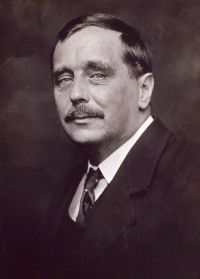 Herbert George Wells,
The Time Machine
(1895)
Herbert George Wells,
The Time Machine
(1895)
“ The alternations of night and day grew slower and slower, and so did the passage of the sun across the sky, until they seemed to stretch through centuries. At last a steady twilight brooded over the earth, a twilight only broken now and then when a comet glared across the darkling sky. ”
 Frank Belknap Long,
The miniature menace
(1950)
Frank Belknap Long,
The miniature menace
(1950)
“ For how could 'time' be measured in minutes or hours by a woman wearing a blindfold, shut away in the dark, and waiting a verdict that could cause the future to slough away into chill gulfs? And how could 'time' have any meaning when the stars faded out of the sky and a sunset gun boomed farewell to the joys of the physical world? ”
Sylvanus Griswold Morley, An Introduction to the Study of the Maya Hieroglyphs
“ Indeed, as primitive man saw nature, day was the only division of time upon which he could absolutely rely. The waxing and waning of the moon, with its everchanging shape and occasional obscuration by clouds, as well as its periodic disappearances from the heavens all combined to render that luminary of little account in measuring the passage of time. ”
 Henry Wadsworth Longfellow,
Hyperion
(1839)
Henry Wadsworth Longfellow,
Hyperion
(1839)
“ For what is Time? The shadow on the dial,--the striking of the clock,--the running of the sand,--day and night,--summerand winter,--months, years, centuries! These are but arbitrary and outward signs,--the measure of Time, not Time itself! Time is the Life of the Soul. ”
 Nathaniel Hawthorne,
Sunday at Home (From "Twice Told Tales"…
Nathaniel Hawthorne,
Sunday at Home (From "Twice Told Tales"…
“ Within, by the light of distant windows, amid refracted shadows, we discern the vacant pews and empty galleries, the silent organ, the voiceless pulpit, and the clock, which tells to solitude how time is passing. Time,—where man lives not,—what is it but eternity? ”
 F. Max Müller,
Memories: A Story of German Love
F. Max Müller,
Memories: A Story of German Love
“ When the eye longs for the light, and the moon rises behind the firs, reflecting their tapering tops against the bright rock opposite, it appears to us like the dead hand of a clock which was once wound up, and will some day cease to strike. ”
W. H. Davenport Adams, Everyday Objects; Or, Picturesque Aspects of Natural History
“ The unequal duration of Day and Night, the succession and regular return of the seasons, all the phenomena observable upon the earth, are but the effects of a cause which we must seek in the heavens. It is impossible to explain them unless we contemplate it on high, relegating our planet into the great chorus of the worlds, where it holds but a modest rank. ”
 William Sharp,
Where the forest murmurs
(1906)
William Sharp,
Where the forest murmurs
(1906)
“ For who of us can measure even Time, that the gnat measures as well as we, or the eagle, or the ancient yew, or the mountain whose granite brows are white with ages—much less Eternity, wherein Time is but a vanishing pulse? ”
 Maturin M. Ballou,
Foot-prints of Travel; Or, Journeyings in Many Lands
Maturin M. Ballou,
Foot-prints of Travel; Or, Journeyings in Many Lands
“ In looking back upon the ancient days it is fortunate that the mellowing influence of time dims the vision, and we see as through a softening twilight; otherwise we should behold such harshness as would embitter all. The olden time, like the landscape, appears best in the purple distance. ”
active 1857-1887 James W. Benson, Time and Time-Tellers
“ Celerity of motion and brevity of duration are discovered to be its chief characteristics. Time is therefore depicted as flying,—fast, noiselessly, and uninterruptedly. It is a river, speeding on with imperceptible but resistless pace to the ocean of eternity. ”
Thomas K. Hervey, The Book of Christmas
“ Time, abstractedly considered as what in truth it is,—a portion of the vast ocean of eternity, a river flowing from the sea and flowing to the sea, a channel leading from deep to deep, through shores on which the races of the world are permitted to build for awhile, until the great waters shall once more cover all, and time, as time, "shall be no more,"—must long have defied the skill of man to map out its surface, and write his memorials upon its impalpable bosom. ”
“ This feeling arises, I should fancy, from the preponderance of light on that half of the dial on which the finger seems to be travelling upwards, compared with the half on which it seems to be travelling downwards. This light to the eye, the mind translates into time. Summer days are long, often wearisomely so. The long-lighted days are bracketed together by a little bar of twilight, in which but a star or two find time to twinkle. ”
 Valmiki,
The Yoga-Vasishtha Maharamayana of Valmiki…
(1899)
Valmiki,
The Yoga-Vasishtha Maharamayana of Valmiki…
(1899)
“ Time plucks the gods and demigods as ripe fruits, from their great arbor of existence, at the end of the world (to make them his food) .27. Time resembles a large fig tree (Ficus religiosus) , studded with all the worlds as its fruits, and resonant with the noise of living beings like the hissing of gnats about them.28. Time accompanied by Action as his mate, regales himself in the garden of the world, blossoming with the moon-beams of the Divine Spirit.29. As the high and huge rock supports its body upon the basis of the earth, so does time rest itself in endless and interminable eternity. ”
Su Tung-P‘o, Gems of Chinese Literature — The Red Wall… (1922)
“ The water passes by but is never gone: the moon wanes only to wax once more. Relatively speaking, Time itself is but an instant of time; absolutely speaking, you and I, in common with all matter, shall exist to all eternity. ”
William James, The Principles of Psychology, Volume 1…
“ Every change leaves a series of trainées lumineuses in the mind like the passage of shooting stars. Each image is in a more fading phase, according as its original was more remote. This group of images gives duration, the mere time-form, the 'bed' of time. The distinction of past, present, and future within the bed comes from our active nature. ”
 Francis William Lauderdale Adams,
Essays in Modernity: Criticisms and Dialogues
(1899)
Francis William Lauderdale Adams,
Essays in Modernity: Criticisms and Dialogues
(1899)
“ The time is conceivable, if it is not actually realisable, in which the earth will be like the moon—in which the sun will be like the moon. What will have come to the energy which they have given off? ”
 Robert S. Ball,
The Earth's Beginning
Robert S. Ball,
The Earth's Beginning
“ It might perhaps be surveyed by beings whose pulses counted centuries, as our pulses count seconds, by beings whose minutes lasted longer than the dynasties of human history, by beings to whom a year was comparable with the period since the earth was young, and since life began to move in the waters. ”
 Juliana Horatia Ewing,
A Flat Iron for a Farthing; or…
Juliana Horatia Ewing,
A Flat Iron for a Farthing; or…
“ Our mechanical arbitrary division of time is indeed a very false one. See how one day drags along, and how quickly another passes. The true measure of time is that which makes each man's life a day, his day. The real night is that in which no man can work. [193] Indeed, nothing can be more true and natural than those Eastern expressions. I remember things that happened in my childhood as one remembers what one did this morning. ”
Various, Blackwood's Edinburgh Magazine…
“ What are the moments loaded with passion, intense, and never-dying—years, ages upon earth! Away with the divisions of time, whilst one short breath—the smallest particle or measure of duration, shall outweigh ages. ”
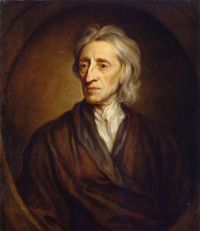 John Locke,
An Essay Concerning Human Understanding…
John Locke,
An Essay Concerning Human Understanding…
“ The revolutions of the sun and moon, the properest measures of time for mankind. The diurnal and annual revolutions of the sun, as having been, from the beginning of nature, constant, regular, and universally observable by all mankind, and supposed equal to one another, have been with reason made use of for the measure of duration. ”
William James, The Principles of Psychology, Volume 1…
“ Let one sit with closed eyes and, abstracting entirely from the outer world, attend exclusively to the passage of time, like one who wakes, as the poet says, "to hear time flowing in the middle of the night, and all things moving to a day of doom." ”
Adrien Le Corbeau, The Forest Giant
“ Time may be imaged as a mirror, a confused mirror across whose impassive face tens of thousands of scenes chase each other in a mazy dance: for in it are reflected the innumerable and never-closing consequences of all action, with all the lights, all the shadows, all the extent and motions of the universe. ”
 Ralph Waldo Emerson,
Nature
(1836)
Ralph Waldo Emerson,
Nature
(1836)
“ To the attentive eye, each moment of the year has its own beauty, and in the same field, it beholds, every hour, a picture which was never seen before, and which shall never be seen again. The heavens change every moment, and reflect their glory or gloom on the plains beneath. ”
James Johnson, Pilgrimages to the Spas in Pursuit of Health and Recreation
“ Of all the mythological divinities, Time is most familiar to us, through the medium of his works:—for he himself is invisible, inaudible, intangible. Time is cloathed, on one side, with flesh and blood:—the other is a naked skeleton. In his right hand he holds a wand, by which he calls into existence, every instant, countless myriads of beings throughout the animal and vegetable world—leading them forward to maturity and age. ”
Garrett Putman Serviss, Curiosities of the Sky
“ When that period of the year returns at which any great event in our lives has occurred we have the feeling that the earth, in its annual round, has, in a manner, brought us back to the scene of that event. ”
Thomas Wright, An original theory or new hypothesis of the universe (1750)
“ Time takes its first Denomination from the diurnal Rotation of the Earth upon its Axis, which we call a natural Day, and this for obvious Reasons we subdivide in twenty-four Parts or Hours. This diurnal Motion having been successively repeated, and the Day renewed three hundred and sixty-five Times, we find that all the vegetable World has gone through all its Variegations, and Nature has again put on the same Face, adapted to the Season; during which Time, and indeed which occasions this general Change and Repetition, the Earth is found to make one intire Revolution round the Sun. ”
Claude Fayette Bragdon, Four-Dimensional Vistas
“ PERIODICITY We recognize and accept this cyclic return of time in such familiar manifestations of it as Nature affords in periodicity. We recognize it also in our mental and emotional life, when the periods can be co-ordinated with known physical phenomena, as in the case of the wanderlust which comes in the mild melancholy of autumn, the moods that go with waning day, and winter night. ”
Various, The Catholic World, Vol. 15, Nos…
“ What a natural and touching thought, then, to associate a holy memory with the hour that links day with night!—the hour of twilight, when the dazzling sunlight is fading away, work is suspended, and propitious leisure brings on long, sweet, and sometimes dangerous reveries! ”
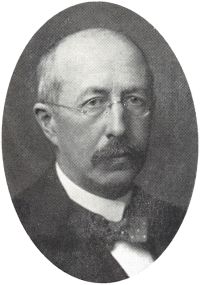 Martin P. Nilsson,
Primitive Time-reckoning
Martin P. Nilsson,
Primitive Time-reckoning
“ The night is the time of complete darkness and rest, and therefore the frequently mentioned expression, ‘sleeping-time’, corresponds to night. Seldom is the whole time during which the sun remains below the horizon to be understood by it. ”
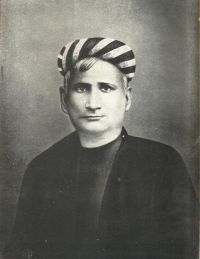 Bankim Chandra Chattopadhyay,
Durgesa Nandini
(1880)
Bankim Chandra Chattopadhyay,
Durgesa Nandini
(1880)
“ Do whatever you will, Time will fly and not remain still. Whatever condition you may be in, Time will fly and not stop its career. Way-farer! are you being roughly handled by the storm and rain? Are the clouds roaring loud and deep over your head? ”
 Richard Jefferies,
The Hills and the Vale
Richard Jefferies,
The Hills and the Vale
“ Time itself has gone on like this; the years have accumulated, first in drifts, then in heaps, and now a vast mound, to which the mountains are knolls, rises up and overshadows us. Time lies heavy on the world. The old, old earth is glad to turn from the cark and care of driftless centuries to the first sweet blades of green. ”
Ralph Waldo Emerson,
Natural history of intellect, and other papers
(1893)
“ Time, the consoler, Time, the rich carrier of all changes, dries the freshest tears by obtruding new figures, new costumes, new roads, on our eye, new voices on our ear. As the west wind lifts up again the heads of the wheat which were bent down and lodged in the storm, and combs out the matted and dishevelled [223] grass as it lay in night-locks on the ground, so we let in time as a drying wind into the seed-field of thoughts which are dark and wet and low bent. Time restores to them temper and elasticity. How fast we forget the blow that threatened to cripple us. Nature will not sit still ”
 John Lancaster Spalding,
Means and Ends of Education
John Lancaster Spalding,
Means and Ends of Education
“ As we grow older the years seem to run to months, the months to weeks, the weeks to days, the days to hours, the hours to moments, until time, like an exhalation, appears to dissolve in the inane, and become the nothing it was and is and will be for eternity. ”
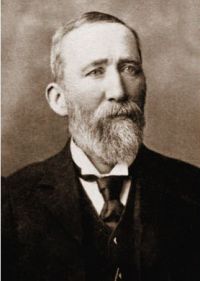 Henry Alleyne Nicholson,
The Ancient Life History of the Earth
Henry Alleyne Nicholson,
The Ancient Life History of the Earth
“ As we grope our way backward through the dark labyrinth of the ages, epoch succeeds to epoch, and period to period, each looming more gigantic in its outlines and more shadowy in its features, as it rises, dimly revealed, from the mist and vapour of an older and ever-older past. ”
Ethan Allen, Reason, the Only Oracle of Man…
“ Furthermore, the order of nature respecting day and night, or the succession of time, is such, as renders it impossible that any identical part of time, which constitutes one day, can do it to all the inhabitants of the globe at the same time, or in the same period. Day is perpetually dawning, and night commencing to some or other of the inhabitants of the terraqueous ball without intermission. ”
Adrien Le Corbeau, The Forest Giant
“ How lustreless and same the passage of time appears when we review it in our memory! but how uncertain and varied it is when we live it moment by moment, leaning out of each second to encounter the next! ”
 Henry David Thoreau,
Journal 02, 1850-September 15, 1851
Henry David Thoreau,
Journal 02, 1850-September 15, 1851
“ What an immeasurable interval there is between the first tinge of moonlight which we detect, lighting with mysterious, silvery, poetic light the western slopes, like a paler grass, and the last wave of daylight on the eastern slopes! It is wonderful how our senses ever span so vast an interval, how from being aware of the one we become aware of the other. ”
W. H. Davenport Adams, Everyday Objects; Or, Picturesque Aspects of Natural History
“ Such a day, in this sad season of the year, when the glory of the woods is rapidly departing, and from the swollen streams and dewy pastures the vapours ascend in a dense whirl of clouds, is of frequent occurrence; and on such a day, the solar sphere, as it struggles through the screening mists, seems like the face of the moon at its full, when slightly veiled. ”
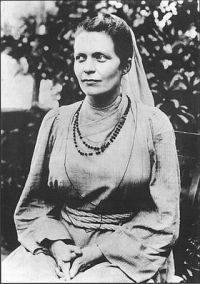 Sister Nivedita,
Kali the Mother
(1900)
Sister Nivedita,
Kali the Mother
(1900)
“ The hour is gone, and the vision is passed away, the vision of the greatest symbol, perhaps, that man has ever imagined for himself. The hour is past, and we are back amongst the mountains in the early ages. ”
Robert S. Ball,
Time and Tide: A Romance of the Moon
“ Thus it is that when we stretch our view through immense vistas of time past, or when we look forward through immeasurable ages of time to come, the alteration in the length of the day will assume the most startling proportions, and involve the most momentous consequences. ”
