Summary

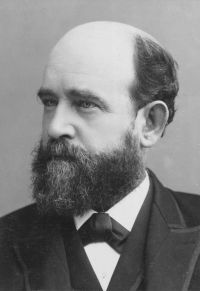
Portrait of Henry George Henry George Progress and Poverty (George)… (1879)

Man creates nothing. The whole human race, were they to labour for ever, could not create the tiniest mote that floats in a sunbeam - could not make this rolling sphere one atom heavier or one atom lighter. In producing wealth, labour with the aid of natural forces but works up preexisting matter into the forms desired and must therefore have access to this matter and to these forces - that is to say, to land. The land is the source of all wealth. It is the mine from which must be drawn the ore that labour fashions. It is the substance to which labour gives the form.
Source: Wikisource

Portrait of Henry George Henry George Progress and Poverty (George)… (1879)

If men now unemployed were given the opportunity to produce wealth from the land, they would not only be employing themselves, but would be employing all the mechanics of the city, giving custom to the storekeepers, trade to the merchants, audiences to the theatres and subscribers and advertisements to the newspapers. I do not mean to say that every unemployed man could turn farmer or build himself a house, if he had the land; but that enough could and would do so to give employment to the rest. What is it, then, that prevents labour from employing itself on this land?
Source: Wikisource

Portrait of Henry George Henry George Progress and Poverty (George)… (1879)

This check to production, beginning at the basis of interlaced industry, propagates itself from exchange point to exchange point, cessation of supply becoming failure of demand, until, so to speak, the whole machine is thrown out of gear, and the spectacle is everywhere presented of labour going to waste while labourers suffer from want. Though custom has dulled us to it, it is a strange and unnatural thing that men who wish to labour, in order to satisfy their wants, cannot find the opportunity.
Source: Wikisource

Get perspective with Kwize: daily news enlightened by great literature