Summary

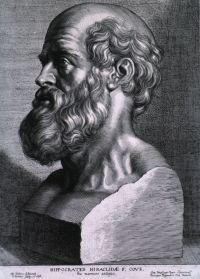
Portrait of Hippocrates Hippocrates On the Sacred Disease

For if a man by magical arts and sacrifices will bring down the moon, and darken the sun, and induce storms, or fine weather, I should not believe that there was anything divine, but human, in these things, provided the power of the divine were overpowered by human knowledge and subjected to it. But perhaps it will be said, these things are not so, but, not withstanding, men being in want of the means of life, invent many and various things, and devise many contrivances for all other things, and for this disease, in every phase of the disease, assigning the cause to a god.
Source: Wikisource

Portrait of Hippocrates Hippocrates On the Sacred Disease

It is thus with regard to the disease called Sacred: it appears to me to be nowise more divine nor more sacred than other diseases, but has a natural cause from the originates like other affections. Men regard its nature and cause as divine from ignorance and wonder, because it is not at all like to other diseases. And this notion of its divinity is kept up by their inability to comprehend it, and the simplicity of the mode by which it is cured, for men are freed from it by purifications and incantations.
Source: Wikisource

Portrait of Hippocrates Hippocrates On the Sacred Disease

Thus is this disease formed and prevails from those things which enter into and go out of the body, and it is not more difficult to understand or to cure than the others, neither is it more divine than other diseases.
Men ought to know that from nothing else but the brain come joys, delights, laughter and sports, and sorrows, griefs, despondency, and lamentations.
Source: Wikisource

Get perspective with Kwize: daily news enlightened by great literature