Philip Henry Pye-Smith

Philip Henry Pye-Smith

Summary

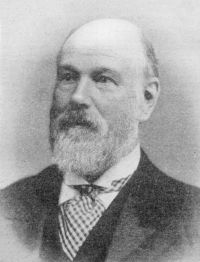
Portrait of Philip Henry Pye-Smith Philip Henry Pye-Smith Encyclopædia Britannica, Ninth Edition (1880)

The work on which he had been chiefly engaged at Oxford, and indeed since the publication of his treatise on the circulation in 1628, was an investigation into the recondite but deeply interesting subject of generation. Charles I. had been an enlightened patron of Harvey's studies, had put the royal deer parks at Windsor and Hampton Court at his disposal, and had watched his demonstration of the growth of the chick with no less interest than the movements of the living heart. Harvey had now collected a large number of observations, though he would probably have delayed their publication.
Source: Wikisource

Portrait of Philip Henry Pye-Smith Philip Henry Pye-Smith Encyclopædia Britannica, Ninth Edition (1880)

He says in the admirable letter to Dr Argent, president of the College of Physicians, which follows the dedication of his treatise to Charles I., that he should not have ventured to publish "a book which alone asserts that the blood pursues its course and flows back again by a new path, contrary to the received doctrine taught so many ages by innumerable learned and illustrious men," if he had not set forth his theory for more than nine years in his college lectures, gradually brought it to perfection, and convinced his colleagues by actual demonstrations of the truth of what he advanced.
Source: Wikisource

Portrait of Philip Henry Pye-Smith Philip Henry Pye-Smith Encyclopædia Britannica, Ninth Edition (1880)

The great anatomist Fabricius, Harvey's teacher at Padua, described the valves of the veins more perfectly than had Sylvius. Ruini, in his treatise on the Anatomy and Diseases of the Horse (1590) , taught that the left ventricle sends blood and vital spirits to all parts of the body except the lungs—the ordinary Galenical doctrine. Yet on the strength of this phrase Professor Ercolani has actually put up a tablet in the veterinary school at Bologna to Ruini as the discoverer of the circulation of the blood!
Source: Wikisource

Get perspective with Kwize: daily news enlightened by great literature