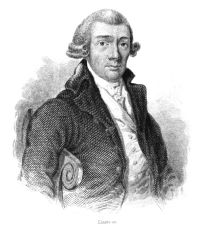
Fabricius

Definition and stakes

active 1886-1887 John W. Graham,  Neæra: A Tale of Ancient Rome

“ Is this folly still so strong within you? How came you here in the name of the gods? and in what does this wench concern you? Do you thus accost every girl you see? She is nothing but a potter’s girl of Surrentum.’
‘Stay, Fabricius, you are hasty,’ spoke Tiberius; ‘let us hear what these people have to say.’
Recalled to himself, Fabricius, with his eyes yet fixed on Neæra, stepped back to a place beside Thrasullus, without deigning his nephew a look or a word. Afer’s brows met with an angry scowl, and he abruptly folded his arms across his breast, whilst muttering some hasty wrathful words.
”
Source: Gutenberg

Portrait of Saint Thomas More Saint Thomas More,  Utopia

“ And therefore Fabricius, a man of a noble and exalted temper, said ‘he would rather govern rich men than be rich himself; since for one man to abound in wealth and pleasure when all about him are mourning and groaning, is to be a gaoler and not a king.’ He is an unskilful physician that cannot cure one disease without casting his patient into another. So he that can find no other way for correcting the errors of his people but by taking from them the conveniences of life, shows that he knows not what it is to govern a free nation. ”
Source: Gutenberg

active 1886-1887 John W. Graham,  Neæra: A Tale of Ancient Rome

“ The young man’s heart softened to see the mingled emotions which swelled the stately Senator’s breast, and he heartily returned the vigorous clasp of his hands.
‘You are yet hale and strong, and such a friend as I can be, I hope to be, for many a year to come,’ he answered.
‘The end cannot be far away now,’ said Fabricius, shaking his head. ‘I stand in no fear of it, for in truth I have nothing left to live for. The gods preserve thee from a solitary old age such as mine. This gloomy house was once bright and happy enough; death has reaped a rich harvest in its walls.
”
Source: Gutenberg

Get perspective with Kwize: daily news enlightened by great literature