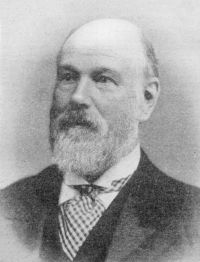
Philip Henry Pye-Smith

Philip Henry Pye-Smith

Summary

Portrait of Philip Henry Pye-Smith Philip Henry Pye-Smith 1911 Encyclopædia Britannica, Volume 13… (1911)

He begins his treatise by pointing out the many inconsistencies and defects in the Galenical theory, quoting the writings of Galen himself, of Fabricius, Columbus and others, with great respect, but with unflinching criticism. For, in his own noble language, wise men must learn anatomy, not from the decrees of philosophers, but from the fabric of nature herself, “nec ita in verba jurare antiquitatis magistrae, ut veritatem amicam in apertis relinquant, et in conspectu omnium deserant.”
Source: Wikisource

Portrait of Philip Henry Pye-Smith Philip Henry Pye-Smith 1911 Encyclopædia Britannica, Volume 13… (1911)

Harvey could not discover the capillary channels by which the blood passes from the arteries to the veins. This gap in the circulation was supplied several years later by the great anatomist Marcello Malpighi, who in 1661 saw in the lungs of a frog, by the newly invented microscope, how the blood passes from the one set of vessels to the other. Harvey saw all that could be seen by the unaided eye in his observations on living animals; Malpighi, four years after Harvey’s death, by another observation on a living animal, completed the splendid chain of evidence.
Source: Wikisource

Portrait of Philip Henry Pye-Smith Philip Henry Pye-Smith 1911 Encyclopædia Britannica, Volume 13… (1911)

The work on which he had been chiefly engaged at Oxford, and indeed since the publication of his treatise on the circulation in 1628, was an investigation into the recondite but deeply interesting subject of generation. Charles I. had been an enlightened patron of Harvey’s studies, had put the royal deer parks at Windsor and Hampton Court at his disposal, and had watched his demonstration of the growth of the chick with no less interest than the movements of the living heart. Harvey had now collected a large number of observations, though he would probably have delayed their publication.
Source: Wikisource

Get perspective with Kwize: daily news enlightened by great literature