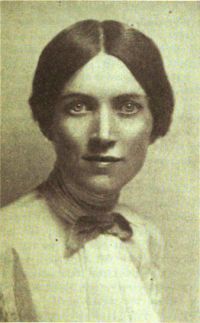
Honoré Willsie

Honoré Willsie

Summary

Portrait of Honoré Willsie Honoré Willsie The Adopted Mother (1922)

They pitied the boss. They considered me as a poor, well-meaning nut. Why, why, with a so-called art which, they said, some people at least liked, why jeopardize it by an act like this?
Good heavens! as if talent was so fragile a thing that a child riproaring about the house could destroy it! If my talent was of so frail an order, it was not art at all that I was cultivating, but sickly temperament, and the sooner I discovered it and changed my work, the better.
The happiest thing about life is that nothing lasts forever. How unendurable living would be if this were not so.
Source: Wikisource

Portrait of Honoré Willsie Honoré Willsie The Adopted Mother (1922)

I have no regrets now for that tragedy of my childhood, though it took me many years to give up regretting. I do not think it a good or gracious thing for a human being to come through childhood without having looked upon some of the gaunt realities of life. Such glimpses tear away illusions while the mind is still plastic enough to reform to the actual, give a capacity for evaluating joy impossible to the untried child, give maturity a poise that life's worst blows can only temporarily disturb.
Source: Wikisource

Portrait of Honoré Willsie Honoré Willsie The Adopted Mother (1922)

It is not only that I have become a member of a class that speaks the language of childhood, that can see life table-high with all its mysteries, incongruities, and joys, that my whole angle toward child training has shifted, but that there has come to me, just at what point I cannot say, a profound conviction that the little child who died so long ago has never died, can never die as long as my home shelters with the old devotion other children of another decade.
Source: Wikisource

Get perspective with Kwize: daily news enlightened by great literature