“ It has become a very trite saying that riches do not bring happiness; and certainly luxury, which riches can command, does not bring content, which is the greatest of all pleasures. On the contrary, the moment the body or mind is over-indulged in any way, it immediately demands more of the same indulgence, and even in stronger doses. Who does not know that too much wine makes one desire more? Who, after reading a novel, does not feel a longing for another? ”
Summary
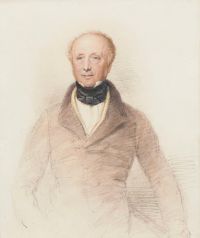
“Interludes”, is a work by Horace Smith. It explores elements such as luxury, Hawkstone and criticism.
Quotes from Interludes (Horace Smith)
“ Barton felt that what had been said was true and not true. One of the most painful consequences of wrong-doing is that the wrong has a sort of fungus growth about it, and insists upon appearing more wrong than it ever was meant to be.“Hawkstone,” he said at last, “I swear to you, on my honour as a gentleman, I have never dreamed of doing her an injury. I have been very, very foolish; I have come between you and her with my cursed folly. I deserve anything you may say or do to me. I care nothing about the waves; let them come. Take her with you up the cliff, and leave me to drown. ”
“ It is nature who, in the structure of the leaf or in the avenue of the lofty limes, teaches the architect how to adorn his designs with the most graceful of embellishments, to rear the lofty column or display the lengthening vista of the cathedral aisle. It is nature who is teaching us all to be tender, loving, and true, and to love and worship God, and to admire all His works. Let us then in our criticism refer everything first of all to nature. Is the work natural? Does it follow nature? Secondly, does it follow the rules of art? ”
“ If the critic really believes that a new poet writes like Milton, or a new artist paints like Sir Joshua, let him say so; or if he thinks any work vile or contemptible, let him say so; but let him say so well. Mere exaggerated language, as we have seen, is not strength; but if there is real strength in the criticism, and it is proportionate and appropriate, it will effect its purpose. It will free the genius, or it will crush the humbug. A good critic should be feared:“Good Lord, I wouldn’t have that man Attack me in the Times,” ”
“ Nelly Crayshaw was talking saucily with Hawkstone as we came down to the quay. I noticed Barton shaking hands with her, and whispering a few words as we got into the boat; and I noticed also a certain sheepish, and rather sulky look upon Hawkstone’s face, as he did so; and if I was not mistaken, my learned friend Glenville let something very like an oath escape him as he shouted: “Barton, Barton, come along; we are all waiting for you!”I do not think Nelly could be called a beauty. The face was too flat, the mouth was too large, and the colour of the cheeks was too brilliant. ”
“ This is all very amusing, and I don’t know that the case upon that side could be better stated, except that it is overstated; for, if this be true, there ought to be no such thing as criticism at all, and all rules are worse than useless. Everybody may do as he pleases. And yet we know that not only is there a right way and a wrong of painting a picture, writing a book, making a building, or composing a symphony, but there are rules which, if disobeyed, will destroy the work. These rules, apparently artificial, have their foundation in nature, and were first dictated by her. ”
“ Can anything be more awful than a public dinner—the waste, the extravagance, the outrageous superfluity of everything, the enormous waste of time, the solemn gorging, as if the whole end and aim of life were turtle and venison. I do not know whether to dignify such proceedings by the name of luxury. But what shall I say of gentlemen’s clubs. They are the very hotbed of luxury. By merely asking for it you obtain almost anything you require in the way of luxury. ”
“ I don’t mean to talk about libel at all, or, at least, not more than I can help. I have been endeavouring to show what good criticism should be like. If criticism is so base that there is a question to be left to a jury as to what damages ought to be paid for the speaking or writing of it, one may say at once that it is unworthy of the name of criticism at all. Slander is not criticism. But there is a great deal of criticism which may be called not bonâ fide, which is yet not malicious. ”
“ I have thus endeavoured to show what I mean by my six divisions of criticism, and I have no doubt you will all of you have divined that my six divisions are capable of being expressed in one word, Criticism must be true. To be true, it must be appreciative, or understanding, it must be in due proportion, it must be appropriate, it must be strong, it must be natural, it must be bonâ fide. There is nothing which an Englishman hates so much as being false. Our great modern poet, in one of his strongest lines, says—“This is a shameful thing for men to lie.” ”
“ I suppose we shall all admit that bad luxury is bad, and good luxury is good, unless the phrase good luxury is a contradiction in terms. We must try to avoid disputing about words. The word luxury, according to its derivation, signifies an extravagant and outrageous indulgence of the appetites or desires. If we take this as the meaning of the word, we shall agree that luxury is bad; but if we take luxury to be only another name for the refinements of civilization, we shall all approve of it. ”
“ This hoarding of wealth, this craving for it, is only another form of luxury, the luxury of growing rich. Some like to be thought rich, and called rich, and treated with a fawning respect on account of their riches; others love to hide their riches, but to hug their money in secret, and seem to enjoy the prospect of dying rich. I was engaged in a singular case some time ago, in which an old lady who had starved herself to death, and lived in the greatest squalor, had secreted £250 in a stocking under the mattress of her bed. ”
“ But speaking seriously, I am sure that in some sort of work lies the antidote to luxury. When Orpheus sailed past the beautiful islands “lying in dark purple spheres of sea,” and heard the songs of the idle and luxurious syrens floating languidly over the waters, he drowned their singing in a pæan to the gods. Religion often affords a great incentive to work for the good of others; and, in working for others, we have neither the time, nor the inclination, to be over indulgent of ourselves. ”
“ We pray that we may have “a right judgment in all things.” I am aware that it is an old saying that “people are better than their opinions,” and it is a mercy that it is so, for very many persons not only are full of false opinions upon almost every subject, but even think that it is of no consequence what opinions they hold. Whether a particular action is morally right or wrong, or whether a book or a picture is really good or bad, is a matter upon which they form either no judgment or a wrong one with perfect equanimity. ”
“ Sometimes the language of criticism is not that of exaggeration, but yet it is quite as inappropriate. The critic may have taken his seat too high or too low for a proper survey, or he may, by want of education or by carelessness, use quite the wrong words to express his meaning. You will hear a man say, “I was enchanted with the Biglow Papers,” or “I was charmed with the hyenas at the Zoological Gardens.” I think one of the distinguishing characteristics of a gentleman, and what makes the society of educated gentlemen so pleasant, is that their language is appropriate without effort. ”
“ The effect of habits of luxury upon the brute creation is easily seen. How dreadfully the harmless necessary cat deteriorates when it is over-fed and over-warmed. It may, for all I know, become more humane, but it becomes absolutely unfit to get its own living. What is more despicable than a lady’s lap-dog, grown fat and good for nothing, and only able to eat macaroons! Even worms, according to Darwin, when constantly fed on delicacies, become indolent and lose all their cunning.I will note next that habits of self-indulgence render us careless of the misfortunes of others. ”
“ The present writer is one of the most handsome, most amiable, and most witty of men; but if there is one vice more than another at which his soul revolts, it is the sin of egotism. Else the world would here have become the possessor of one of the most eloquent pages in literature. It is said that artists, who paint their own portraits, make a mere copy of their image in the looking glass. For my part, if I had to draw my own likeness, I would scorn such paltry devices. The true artist draws from the imagination. Let any man think for a moment what manner of man he is. ”
“ The young man had no real genius for painting, and his father knew it.It must be remembered that criticism cannot be strong unless it be the real opinion of the writer. If the critic is hampered by endeavouring to make his own views square with those of the writer, or the publisher, or the public, he cannot speak out his mind, but is half-hearted in his work. ”
“ Mrs. Porkington during this scene had turned pale and red alternately. Her husband’s dignity and presence of mind astonished her. She was so excited as to be almost unable to play her cards, and her lips and eyes betrayed very great emotion. The tutor’s cheek showed some trace of colour, and his manner was even graver than usual, but that was all; and his wife felt the presence of a superior force to her own, and was checked into silence. I had always felt sure that there was a reserve of force in the timid nature of our Coach which seemed to peep forth at times and then retire again. ”
“ Who can tell what may be the effect of seeing day by day an hideous building, of hearing day by day indifferent music, of constantly reading a lot of feeble twaddle? Surely one effect will be that we shall gradually lose our appreciation of what is good and beautiful. “A thing of beauty is a joy for ever.” ”
“ Criticism should be appreciative.By this I mean, not that critics should always praise, but that they should understand. They should see the thing as it is and comprehend it. This is the rock upon which most criticisms fail—want of knowledge. In reading the lives of great men, how often are we struck with the want of appreciation of their fellows. Who admired Turner’s pictures until Turner’s death? Who praised Tennyson’s poems until Tennyson was quite an old man? ”
“ I have not time (nor is the question a part of my subject) to discuss what should be done with the money hitherto spent in idle luxury. We know, however, that we have the poor always with us, and that we can always learn the luxury of doing good. In one way or another we ought to see that our superfluous wealth should drain from the high lands into the valleys; not indeed to make the poor luxurious, but to provide them with comfort, to give them health, strength, and enjoyment. ”
“ Pipes and cigars may be a luxury to the idle and rich, but we ought not to grudge a pipe to a poor man who is overworked and miserable. Some degree of comfort we all feel to be at times essential when we have a comfortless task to perform. With good food and sleep, for instance, we can get through the roughest work; with the relaxation of pleasant society we can do the most tedious daily work. ”
“ Old ruins look beautiful by reason of the rain and the wind, the heat of August and the frost of January, and I am sure I have often seen in men—aye, and in women too—far more beauty where the tempests have passed over the face and brow, than where the life has been more sheltered and less interesting. ”
“ Probably in this weary world any indulgence or pleasure which is not bad is not indifferent, but absolutely good. The world is not so bright, so comfortable, so pleasant, that we can afford to scorn the good the gods provide us. In Mr. Reade’s book on Study and Stimulants, Matthew Arnold says, a moderate use of wine adds to the agreeableness of life, and whatever adds to the agreeableness of life, adds to its resources and powers. ”
“ The rich were extravagant, for life had ceased to have practical interest, except for its material pleasures; the occupation of the higher classes was to obtain money without labour, and to spend it in idle enjoyment. Patriotism survived on the lips, but patriotism meant the ascendancy of the party which would maintain the existing order of things, or would overthrow it for a more equal distribution of the good things, which alone were valued. Religion, once the foundation of the laws and rule of personal conduct, had subsided into opinion. ”
“ The wind and the sea have not been idle while we have been talking. We must be sharp now. Shout to your friends, sir. I cannot shout just yet, I think.”Glenville shouted as loud as he was able.“That won’t do, I’m afeard,” said Hawkstone, and he gave a loud halloo, which rang from cliff to cliff, and brought out a cloud of gulls, sailing round and round for a while in great commotion, but soon disappearing into the cliffs again.We were most of us already descending when we heard Hawkstone’s voice; the boat was soon ready; but where were Thornton and his lady love? ”
“ Harry Barton, Richard Glenville, Thomas Thornton, and I, made up Porkington’s Reading Party.Harry Barton’s father was a Manchester cotton spinner of great wealth. Himself a man of no education, beyond such knowledge as he had picked up in the course of an arduous life, the cotton spinner was not oblivious to those advantages which ought to accrue to a liberal education; and he resolved that his son, a fine handsome lad, should not fail in life for want of them. ”
“ A portion of Porkington’s hard earned gains was transmitted regularly to his two aged parents, while he himself, partly from habit and partly from indifference, lived as frugally as possible.“Bless me!” cried Mrs. Porkington, within six months of her marriage, “To think that you should have squandered such large sums of money upon people who seem to have got on very well without them.”“My dear,” replied he, “they are very poor, and in want of many comforts.” ”
“ Criticism is the art of judging. As reasonable persons we are called upon to be constantly pronouncing judgment, and either acting upon such judgment ourselves or inviting others to do so. I do not know how anything can be more important with respect to any matter than the forming a right judgment about it. ”
“ It is under the free open air of heaven, in the wild woods and the meadows that the loveliest and sweetest flowers bloom, and not in the trim gardens or the hot-houses, and even in our gardens in England we strive to preserve some lingering traits of the open country. ”
“ It argues a want of genius in ourselves if we fail to see it in others; unless, indeed, we do really see it, and only say we don’t out of envy. This is very shameful. I had rather do like some amiable people I have known, disparage the work of a friend in order to set others praising it.Criticism should therefore be appreciative in two ways. The critic should bring the requisite amount and kind of knowledge and the proper frame of mind and temper. ”
“ Matthew Arnold’s essays on criticism that the endeavour of the critic should be to see the object criticized “as in itself it really is,” or as in another passage he says, “Real criticism obeys an instinct prompting it to know the best that is known and thought in the world.” “In order to do or to be this, criticism,” he says, in italics, “ought to be disinterested.” He points out how much English criticism is not disinterested. ”
“ There are, however, some people who are very luxurious without caring much for any of these things. Their main desire appears to be to live a long time, and to preserve their youth and beauty to the last. For this purpose they surround themselves with comfort, they decline to see or hear of anything which they don’t like for fear it should make their hair grey and their faces wrinkled, and their whole talk is of ailments and German waters. Swift somewhere or other expresses his contempt for this sort of person. ”
Common terms
Similar works
Views and Reviews (Henry James…On War — Book II (Karl von Clausewitz…The Age of Tennyson (Hugh Walker…The Art of Letters (Robert Lynd…Readers and Writers (1917-1921…Literary values and other papers…Aspects of Literature (John Middleton Murry…A History of Nineteenth Century Literature…The Little Review, November 1915…English literary criticism (Charles Edwyn Vaughan…
