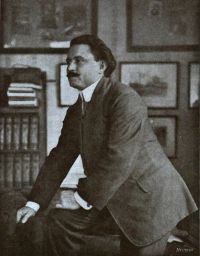
Jan Havlasa

Jan Havlasa

Summary

Portrait of Jan Havlasa Jan Havlasa Four Japanese Tales (1919)

His heart bled; and his brush pictured the excruciating desire of that poor heart in one single twig with three charming blossoms that opened beneath his hand in tremulous and sweet agitation. Never before had he been so well contented with his work; he felt that he had created life, or even more, that he had divined the meaning of life. There were people who heard the rustling of the spring breeze in his plume-like bamboos; but nobody had thought of listening in his paintings for the soul of the bamboo, for the soul of nature.
Source: Wikisource

Portrait of Jan Havlasa Jan Havlasa Four Japanese Tales (1919)

Seldom had I seen pillars and beams more beautifully carved; the gable was a magnificent piece of Japanese art, and its dragons, enlivened by subdued colours, all but twisted and writhed in the sunlight. One could see into the shrine. It was disconcertingly empty, containing only a metal mirror, which was fastened upon two strings, probably streched from the floor clear to the ceiling. What symbol lay in this mirror, now so brilliant? That all our eyes see is but illusion?
Source: Wikisource

Portrait of Jan Havlasa Jan Havlasa Four Japanese Tales (1919)

However, now his hatred bowed its head and became contrite; it changed to pity . . . There still would come moments when his soul would be embittered, when his thoughts would suddenly jumble in his head, when a red mist would be whirled by a burning wind before his dry, parchingly dry eyes . . But so it is with all people: from pity to hate is a mere step . . . The ronin, however, resolved never again in this wasted, wretched, expiating existence to take this step. At that moment the bonsan leaned towards him, and his voice sounded ingratiating.
Source: Wikisource

Get perspective with Kwize: daily news enlightened by great literature