Summary

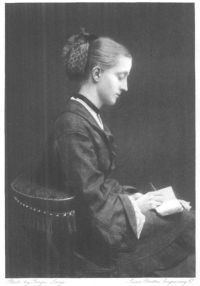
Portrait of Juliana Horatia Ewing Juliana Horatia Ewing Jan of the Windmill: A Story of the Plains

Believe me, my boy, your true mother, the tender nurse of your infancy, sleeps in the sacred shadow of this dear old church. It is your part to make her name, and the name of your respectable foster-father, famous as your own; to render your windmill as highly celebrated as Rembrandt’s, and to hang late laurels of fame on the grave of your grand old schoolmaster. Ah! my child, I know well that the ductile artistic nature takes shape very early. The coloring of childhood stains every painter’s canvas who paints from the heart.
Source: Gutenberg

Portrait of Juliana Horatia Ewing Juliana Horatia Ewing Jan of the Windmill: A Story of the Plains

Eh, Jan! we’re poor fools. I lay awake night after night reconciling my mind to troubles that were never to come, and never dreaming of what was before me. I thought to myself, ‘John Swift, my lad, you’re making yourself a bed of thorns. As sure as you make your son a gentleman, so sure he’ll look down on his old father when he gets up. Can ye bear that, John Swift, and her dead, and him all that ye have?’ I didn’t ask myself twice, Jan. Of course I could bear it. Would any parent stop his child from being better than himself because he’d be looked down on?
Source: Gutenberg

Portrait of Juliana Horatia Ewing Juliana Horatia Ewing Jan of the Windmill: A Story of the Plains

Jan was growing fast both in mind and body. Phases of taste and occupation succeed each other very rapidly when one is young; and there are, perhaps, no more distinct phases, more sudden strides, than in the art of painting. With Jan the pig phase was going, and it was followed by landscape-sketching.
Jan was drawing his pigs one day in the little wood, when he fancied that the gnarled elbow of a branch near him had, in its outline, some likeness to a pig’s face, and he began to sketch it on his slate.
Source: Gutenberg

Get perspective with Kwize: daily news enlightened by great literature