Summary

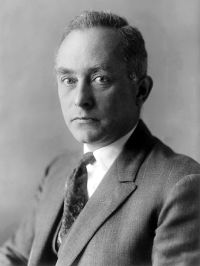
Portrait of Max Born Max Born Concerning the Dynamics of the Electron in the Kinematics of the Principle of Relativity

I interpreted the vector denoted by Minkowski as "electric rest force", as the ponderomotive forces upon the unit charge, in agreement with the approach of Lorentz ; i.e. at every point the electric field strength as it is measured in a coordinate system whose motion agrees with the instantaneous motion of the point. On the other hand one can easily see, that the way by which the resulting forces are ordinarily formed from these individual forces by integration over the volume of the electron at one instant, contradicts the relativity principle.
Source: Wikisource

Portrait of Max Born Max Born Concerning the Dynamics of the Electron in the Kinematics of the Principle of Relativity

However, since experience tells us that no external forces are required to sustain them, it follows that the charge must be distributed in a specific way, namely in homogeneous, spherical, concentric layers, in so far as one makes the assumption that the direction of motion is an arbitrary direction in the electron.
Source: Wikisource

Portrait of Max Born Max Born Concerning the Dynamics of the Electron in the Kinematics of the Principle of Relativity

In order to test the dynamic behavior of such a rigid body, one imagines that it is equipped with electric charge and determines the force exerted upon itself. First, the field of the electron must be calculated for this purpose. Without being forced to make any assumption concerning the form and charge distribution, the following is given:
At hyperbolic motion whose acceleration can indeed have arbitrary large values, the electron carries its field along with itself; radiation is not present. The field is of course different from the ordinary static one
Source: Wikisource

Get perspective with Kwize: daily news enlightened by great literature