Summary

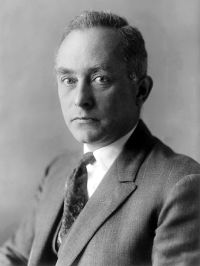
Portrait of Max Born Max Born The Theory of the Rigid Electron in the Kinematics of the Principle of Relativity

Later, this concept of the rigid body proves to be fruitful for the development of dynamics itself; because the rigid body as a continuous mass system of only six degrees of freedom, is not only kinematically of the highest simplicity, but also dynamically by allowing the composition of the forces – which are acting at its points – to "resulting" forces and moments of the same magnitude, whose knowledge is sufficient for the description of motion.
Source: Wikisource

Portrait of Max Born Max Born The Theory of the Rigid Electron in the Kinematics of the Principle of Relativity

The theory of Abraham, which studies the motion of an electron (being rigid in the ordinary sense) in the force field produced by itself, has not only led to a qualitatively satisfying explanation of the phenomena of inertia of free electrons on a pure electric basis, but has also led to a quantitative law for the dependency of the electrodynamic mass from velocity at very small accelerations, which is probably not to be seen as disproved by the experiments.
Source: Wikisource

Portrait of Max Born Max Born The Theory of the Rigid Electron in the Kinematics of the Principle of Relativity

Yet, since every accelerated motion can be approximated by such hyperbolic motions as long as their acceleration doesn't vary too suddenly, one achieves in this way an electrodynamic foundation of the fundamental equations of mechanics. This theory fails only for very rapidly changing accelerations; then also radiation resistances arise besides the inertial resistances. It is remarkable, that an electron causes no actual radiation, as great as its acceleration may be, but it drags its field along with it, which was up to now only known for uniformly moving electrons.
Source: Wikisource

Get perspective with Kwize: daily news enlightened by great literature