Summary

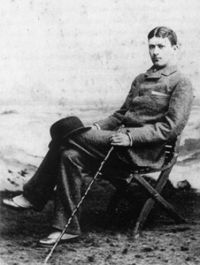
Portrait of Ogden Codman Ogden Codman The Decoration of Houses

It is no exaggeration to say that many houses are deserted by the men of the family for lack of those simple comforts which they find at their clubs: windows unobscured by layers of muslin, a fireplace surrounded by easy-chairs and protected from draughts, well-appointed writing-tables and files of papers and magazines. Who cannot call to mind the dreary drawing-room, in small town houses the only possible point of reunion for the family, but too often, in consequence of its exquisite discomfort, of no more use as a meeting-place than the vestibule or the cellar?
Source: Gutenberg

Portrait of Ogden Codman Ogden Codman The Decoration of Houses

If proportion is the good breeding of architecture, symmetry, or the answering of one part to another, may be defined as the sanity of decoration. The desire for symmetry, for balance, for rhythm in form as well as in sound, is one of the most inveterate of human instincts. Yet for years Anglo-Saxons have been taught that to pay any regard to symmetry in architecture or decoration is to truckle to one of the meanest forms of artistic hypocrisy.
Source: Gutenberg

Portrait of Ogden Codman Ogden Codman The Decoration of Houses

Nothing can be more cheerless than the state of a handful of people sitting after dinner in an immense ball-room with gilded ceiling, bare floors, and a few pieces of monumental furniture ranged round the walls; yet in any house which is simply an enlargement of the ordinary private dwelling the hostess is often compelled to use the ball-room or saloon as a drawing-room.
A gala room is never meant to be seen except when crowded: the crowd takes the place of furniture. Occupied by a small number 136 of people, such a room looks out of proportion, stiff and empty.
Source: Gutenberg

Get perspective with Kwize: daily news enlightened by great literature