Summary

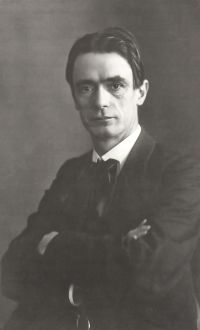
Portrait of Rudolf Steiner Rudolf Steiner The Threefold Commonwealth

They dismiss it with a smile, as ideology, empty theory. From thought, from the mere life of the spirit, there is nothing, they feel certain, to be contributed to the burning social problems of the hour. And yet, when one looks at the matter more closely, it is forced upon one, that the very nerve, the very root-impulse of the modern movement,—especially as a working-class movement,—does not lie in the things about which the modern worker talks, but in thoughts. The modern working-class movement has sprung, as perhaps no other similar movement in the world before it, out of thoughts.
Source: Gutenberg

Portrait of Rudolf Steiner Rudolf Steiner The Threefold Commonwealth

But the worker, in his soul, was torn loose from this order of life. It was not capable of giving him one emotion that could illumine and fill his own life with anything of human worth. There was one thing only, which could give the worker any sense of what a “man” is, one thing only that seemed to have emerged from the old order of life endowed with the power that awakens faith, and that was—scientific thought. It may arouse a smile in some of those who read this, to be told of the “scientific” character of the worker’s conceptions.
Source: Gutenberg

Portrait of Rudolf Steiner Rudolf Steiner The Threefold Commonwealth

And in the capitalistic processes of the modern age something has been turned into a commodity, which the worker feels must not and cannot be a commodity.
If it were only recognised what a fundamental force this is in the social movement amongst the modern workers: this loathing that the modern worker feels at being forced to barter his labour-power to the employer, as goods are bartered in the market,—loathing at seeing his personal labour-power play part as a factor in the supply and demand of the labour-market, just as the goods in the market are subject to supply and demand.
Source: Gutenberg

Get perspective with Kwize: daily news enlightened by great literature