Industrial economy

Definition and stakes

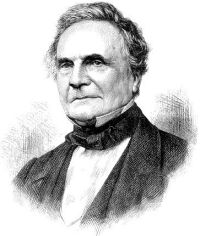
Portrait of John Stuart Mill John Stuart Mill Principles of Political Economy

Continuing the inquiry into the nature of the economical changes taking place in a society which is in a state of industrial progress, we shall next consider what is the effect of that progress on the distribution of the produce among the various classes who share in it. We may confine our attention to the system of distribution which is the most complex, and which virtually includes all others—that in which the produce of manufactures is shared between two classes, laborers and capitalists, and the produce of agriculture among three, laborers, capitalists, and landlords.
Source: Gutenberg

Portrait of John Stuart Mill John Stuart Mill Principles of Political Economy

One is, the [pg 389] tendency of every extension of the market to improve the processes of production. A country which produces for a larger market than its own can introduce a more extended division of labor, can make greater use of machinery, and is more likely to make inventions and improvements in the processes of production. Whatever causes a greater quantity of anything to be produced in the same place tends to the general increase of the productive powers of the world.267 There is (2) another consideration, principally applicable to an early stage of industrial advancement.
Source: Gutenberg

Portrait of John Stuart Mill John Stuart Mill Principles of Political Economy

In all the great branches of manufacturing industry the portion of the cost incurred in the manufacturing process bears in general a large proportion to that represented by the raw material, while the influence of industrial invention, in reducing this portion of the cost, is, as every one knows, great and unremitting in its action.”
As has been said, “the two great cheapeners of production are division of labor and machinery, and the degree in which these admit of being applied to manufacture is mainly dependent upon the scale on which the manufacturing process is carried on.
Source: Gutenberg

Get perspective with Kwize: daily news enlightened by great literature