Summary

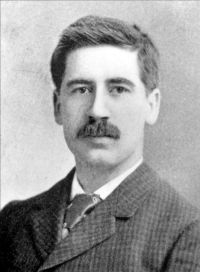
Portrait of Edward Potts Cheyney Edward Potts Cheyney An Introduction to the Industrial and Social History of England

The period of transition from the domestic to the factory system of industry and from the older to the new farming conditions was one of almost unrelieved misery to great masses of those who were wedded to the old ways, who had neither the capital, the enterprise, nor the physical nor mental adaptability to attach themselves to the new. The hand-loom weavers kept up a hopeless struggle in the garrets and cellars of the factory towns, while their wages were sinking lower and lower till finally the whole generation died out.
Source: Gutenberg

Portrait of Edward Potts Cheyney Edward Potts Cheyney An Introduction to the Industrial and Social History of England

Any hindrance to this freedom of the individual to compete freely with all others, any artificial support or encouragement that gives him an advantage over others, is against his own real interest and that of society.
This ideal was necessarily as much opposed to voluntary combinations, and to restrictions imposed by custom or agreement, as it was to government regulation. Individualism is much more than a mere laissez-faire policy of government.
Source: Gutenberg

Portrait of Edward Potts Cheyney Edward Potts Cheyney An Introduction to the Industrial and Social History of England

The basis of the trade unions is arrangement by the collective body of wages, hours, and other conditions of labor for all its members instead of leaving them to individual contract between the employer and the single employee. The workman who joins a trade union therefore divests himself to that extent of his individual freedom of action in order that he may, as he believes, obtain a higher good and a more substantial liberty through collective or associated action.
Source: Gutenberg

Get perspective with Kwize: daily news enlightened by great literature