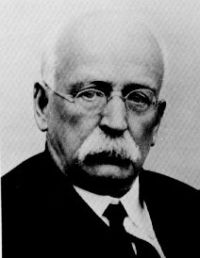
Sir Ebenezer Howard

Sir Ebenezer Howard

Summary

Portrait of Sir Ebenezer Howard Sir Ebenezer Howard Garden Cities of To-Morrow

There are in reality not only, as is so constantly assumed, two alternatives—town life and country life—but a third alternative, in which all the advantages of the most energetic and active town life, with all the beauty and delight of the country, may be secured in perfect combination; and the certainty of being able to live this life will be the magnet which will produce the effect for which we are all striving—the spontaneous movement of the people from our crowded cities to the bosom of our kindly mother earth, at once the source of life, of happiness, of wealth, and of power.
Source: Gutenberg

Portrait of Sir Ebenezer Howard Sir Ebenezer Howard Garden Cities of To-Morrow

For the vastness of the task which seems to frighten some of my friends, represents, in fact, the very measure of its value to the community, if that task be only undertaken in a worthy spirit and with worthy aims. Work in abundance is, as has been several times urged, one of the greatest needs of to-day, and no such field of employment has been opened up since civilisation began as would be represented by the task which is before us of reconstructing anew the entire external fabric of society, employing, as we build, all the skill and knowledge which the experience of centuries has taught us.
Source: Gutenberg

Portrait of Sir Ebenezer Howard Sir Ebenezer Howard Garden Cities of To-Morrow

But is not this attempt to throw the whole blame of and punishment for the present deplorable condition of society on to a single class of men a very great mistake? In what way are landlords as a class less honest than the average citizen? Give the average citizen the opportunity of becoming a landlord and of appropriating the land values created by his tenants, and he will embrace it to-morrow. If then, the average man is a potential landlord, to attack landlords as individuals is very like a nation drawing up an indictment against itself, and then making a scape-goat of a particular class.
Source: Gutenberg

Get perspective with Kwize: daily news enlightened by great literature