Summary

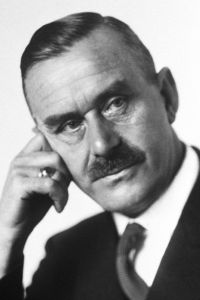
Portrait of Thomas Mann Thomas Mann The Theme of the Joseph Novels (1942)

It is a good and fortunate coincidence that the topic on which I want to speak—or, am to speak—is, in itself, a festive topic, not only because all art as such has, or should have, festive character, but because a literary work is to be discussed whose very object is the idea and the nature of the festival: more than that—it is, for its own part, a sort of festive celebration, an observance and visualization, a solemn action which playingly neutralizes time and depicts the past and the future, the tunelessly existing, the myth, is the present.
Source: Wikisource

Portrait of Thomas Mann Thomas Mann The Theme of the Joseph Novels (1942)

For what else is myth but succession and recollection, the forming and coining of the present with the past, the childlike identification with an admired idol—in short, tradition? Myth is tradition, and to live in tradition means to live in the myth.
An artist's life, Ladies and Gentlemen, is a life of experience in manifold ways: when it strives to follow the great, it also becomes a means of experiencing greatness,—not like the scientist, nor the historian: not objectively and from without, but in a subjective, practical, productive way.
Source: Wikisource

Portrait of Thomas Mann Thomas Mann The Theme of the Joseph Novels (1942)

I believe, Ladies and Gendemen, that the sufferings and stirring adventures, through which humanity has been going now for decades, will bring forth a new, deepened feeling of humanity, indeed a new HUMANISM, remote from all shallow optimism, but full of sympathy, which will be only too necessary for the work of reconstruction that will confront us after the tremendous moral and material devastations, after the collapse of the accustomed world.
Source: Wikisource

Get perspective with Kwize: daily news enlightened by great literature