Summary

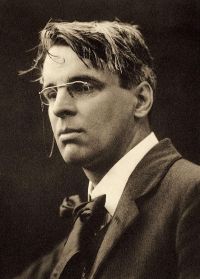
Portrait of W. B. Yeats W. B. Yeats Per Amica Silentia Lunae

When I think of any great poetical writer of the past (a realist is an historian and obscures the cleavage by the record of his eyes) [Pg 24] I comprehend, if I know the lineaments of his life, that the work is the man’s flight from his entire horoscope, his blind struggle in the network of the stars. William Morris, a happy, busy, most irascible man, described dim colour and pensive emotion, following, beyond any man of his time, an indolent muse; while Savage Landor topped us all in calm nobility when the pen was in his hand, as in the daily violence of his passion when he had laid it down.
Source: Gutenberg

Portrait of W. B. Yeats W. B. Yeats Per Amica Silentia Lunae

The dead living in their memories, are, I am persuaded, the source of all that we call instinct, and it is their love and their desire, all unknowing, that make us drive beyond our reason, or in defiance of our interest it may be; and it is the dream martens that, all unknowing, are master-masons to the living martens building about church windows their elaborate nests; and in their turn, the phantoms are stung to a keener delight from a concord between their luminous pure vehicle and our strong senses.
Source: Gutenberg

Portrait of W. B. Yeats W. B. Yeats Per Amica Silentia Lunae

Dante himself sings to Giovanni Guirino “at the approach of death”;
“The King, by whose rich grave his servants be
With plenty beyond measure set to dwell,
Ordains that I my bitter wrath dispel,
And lift mine eyes to the great Consistory.”
[Pg 29]
V
We make out of the quarrel with others, rhetoric, but of the quarrel with ourselves, poetry. Unlike the rhetoricians, who get a confident voice from remembering the crowd they have won or may win, we sing amid our uncertainty; and, smitten even in the presence of the most high beauty by the knowledge of our solitude, our rhythm shudders.
Source: Gutenberg

Get perspective with Kwize: daily news enlightened by great literature