Summary

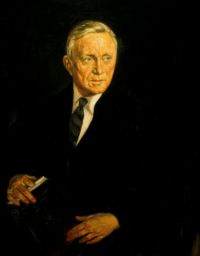
Portrait of William O. Douglas William O. Douglas Tilton v. Richardson — Dissent

As I said in the Lemon and DeCenso cases, a parochial school is a unitary institution with subtle blending of sectarian and secular instruction. Thus the practices of religious schools are in no way affected by the minimal requirement that the government financed facility may not 'be used for sectarian instruction or as a place for religious worship.' Money saved from one item in the budget is free to be used elsewhere. By conducting religious services in another building, the school has-rent free-a building for nonsectarian use.
Source: Wikisource

Portrait of William O. Douglas William O. Douglas Tilton v. Richardson — Dissent

A parochial school is usually developed in connection with a church. In many cases the church and school monies are not even separated. Such a school is in no sense a public school, even though some children from other groups may be admitted to it. The buildings are not owned and controlled by a community of American people, not even by a community of American Roman Catholic people. The title of ownership in a public school is vested in the local community, in the elected officers of the school board or the city council.
Source: Wikisource

Portrait of William O. Douglas William O. Douglas Tilton v. Richardson — Dissent

Yet the sectarian purpose is aided by making the parochial school system viable. The purpose is to increase 'student enrollment' and the students obviously aimed at are those of the particular faith now financed by taxpayers' money. Parochial schools are not beamed at agnostics, atheists, or those of a competing sect. The more sophisticated institutions may admit minorities; but the dominant religious character is not changed.
The reversion of the facility to the parrochial school [2] at the end of 20 years is an outright grant, measurable by the present discounted worth of the facility.
Source: Wikisource

Get perspective with Kwize: daily news enlightened by great literature