Summary

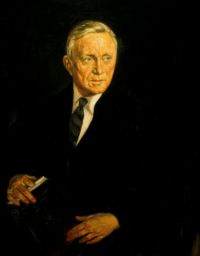
Portrait of William O. Douglas William O. Douglas Wisconsin v. Yoder — Dissenting Opinion (1972)

While the parents, absent dissent, normally speak for the entire family, the education of the child is a matter on which the child will often have decided views. He may want to be a pianist or an astronaut or an oceanographer. To do so he will have to break from the Amish tradition. [2]
It is the future of the student, not the future of the parents, that is imperiled by today's decision. If a parent keeps his child out of school beyond the grade school, then the child will be forever barred from entry into the new and amazing world of diversity that we have today.
Source: Wikisource

Portrait of William O. Douglas William O. Douglas Wisconsin v. Yoder — Dissenting Opinion (1972)

The essence of Welsh's philosophy, on the basis of which we held he was entitled to an exemption, was in these words:
"'I believe that human life is valuable in and of itself; in its living; therefore I will not injure or kill another human being. This belief (and the corresponding "duty" to abstain from violence toward another person) is not "superior to those arising from any human relation." On the contrary: it is essential to every human relation.
Source: Wikisource

Portrait of William O. Douglas William O. Douglas Wisconsin v. Yoder — Dissenting Opinion (1972)

The child may decide that that is the preferred course, or he may rebel. It is the student's judgment, not his parents', that is essential if we are to give full meaning to what we have said about the Bill of Rights and of the right of students to be masters of their own destiny. [3] If he is harnessed to the Amish way of life by those in authority over him and if his education is truncated, his entire life may be stunted and deformed. The child, therefore, should be given an opportunity to be heard before the State gives the exemption which we honor today.
Source: Wikisource

Get perspective with Kwize: daily news enlightened by great literature