Summary

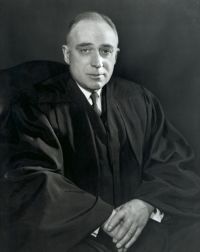
Portrait of John Marshall Harlan II John Marshall Harlan II Welsh v. United States — Concurrence

It evinces a judgment that individuals who hold the beliefs set forth by the statute should not be required to bear arms, and the statutory belief that qualifies is only a religious belief. Under these circumstances I fail to see how this legislation has 'any substantial legislative purpose' apart from honoring the conscience of individuals who oppose war on only religious grounds. I cannot, moreover, accept the view, implicit in the dissent, that Congress has any ultimate responsibility for construing the Constitution.
Source: Wikisource

Portrait of John Marshall Harlan II John Marshall Harlan II Welsh v. United States — Concurrence

When the plain thrust of a legislative enactment can only be circumvented by distortion to avert an inevitable constitutional collision, it is only by exalting form over substance that one can justify this veering off the path that has been plainly marked by the statute. Such a course betrays extreme skepticism as to constitutionality, and, in this instance, reflects a groping to preserve the conscientious objector exemption at all cost.
Source: Wikisource

Portrait of John Marshall Harlan II John Marshall Harlan II Welsh v. United States — Concurrence

It is, of course, desirable to salvage by construction legislative enactments whenever there is good reason to believe that Congress did not intend to legislate consequences that are unconstitutional, but it is not permissible, in my judgment, to take a lateral step that robs legislation of all meaning in order to avert the collision between its plainly intended purpose and the commands of the Constitution.
Source: Wikisource

Get perspective with Kwize: daily news enlightened by great literature