Summary

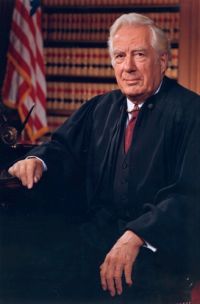
Portrait of Warren E. Burger Warren E. Burger Wisconsin v. Yoder — Opinion of the Court (1972)

The essence of all that has been said and written on the subject is that only those interests of the highest order and those not otherwise served can overbalance legitimate claims to the free exercise of religion. We can accept it as settled, therefore, that, however strong the State's interest in universal compulsory education, it is by no means absolute to the exclusion or subordination of all other interests.
Source: Wikisource

Portrait of Warren E. Burger Warren E. Burger Wisconsin v. Yoder — Opinion of the Court (1972)

When Thomas Jefferson emphasized the need for education as a bulwark of a free people against tyranny, there is nothing to indicate he had in mind compulsory education through any fixed age beyond a basic education. Indeed, the Amish communities singularly parallel and reflect many of the virtues of Jefferson's ideal of the "sturdy yeoman" who would form the basis of what he considered as the ideal of a democratic society.
Source: Wikisource

Get perspective with Kwize: daily news enlightened by great literature