Summary

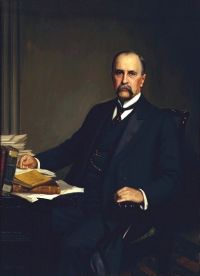
Portrait of William Osler William Osler Man's Redemption of Man: A Lay Sermon

There is no place for despondency or despair. As for the dour dyspeptics in mind and morals who sit idly croaking like ravens,—let them come into the arena, let them wrestle for their flesh and blood against the principalities and powers represented by bad air and worse houses, by drink and disease, by needless pain, and by the loss annually to the state of thousands of valuable lives—let them fight for the day when a man's life shall be more precious than gold. Now, alas! the cheapness of life is every day's tragedy!
Source: Gutenberg

Portrait of William Osler William Osler Man's Redemption of Man: A Lay Sermon

Groping between what Sir Thomas Browne so finely calls "the night of our forebeing" and the unknown future—the dark before and after, he at last came to himself, and with the help of this key unlocked the mysteries of Nature, and found a way of physical salvation.
Man's redemption of man is the great triumph of Greek thought. The tap-root of modern science sinks deep in Greek soil, the astounding fertility of which is one of the out-standing facts of history.
Source: Gutenberg

Portrait of William Osler William Osler Man's Redemption of Man: A Lay Sermon

The Psalmist will have it that no man may redeem his brother, but this redemption of his body has been bought at a price of the lives of those who have sought out Nature's processes by study and experiment. Silent workers, often unknown and neglected by their generation, these men have kept alive the fires on the altars of science, and have so opened the doors of knowledge that we now know the laws of health and disease. Time will only permit me to refer to a few of the more important of the measures of man's physical redemption.
Source: Gutenberg

Get perspective with Kwize: daily news enlightened by great literature