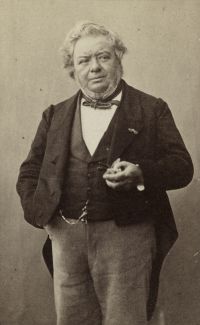
X.-B. Saintine

X.-B. Saintine

Picciola (1893)

Summary

Portrait of X.-B. Saintine X.-B. Saintine Picciola (1893)

The old man extended his hand encouragingly towards his companion.
“Be judged by your own image of the worm,” said Girardi. “The worm, after crawling its season on the earth, fed with bitter leaves, condemned to the slime of the marsh or the dust of the road, constructs his own chrysalis—a temporary coffin—from which to emerge, transformed, purified—to flutter from flower to flower and feed upon their precious perfumes. On two radiant wings the new creature takes its flight towards the skies, even as man, the image of his Creator, rises to the bosom of his God.”
Source: Gutenberg

Portrait of X.-B. Saintine X.-B. Saintine Picciola (1893)

Charney followed in silence. He had not courage to articulate a syllable. A consciousness of pain and constraint chased every feeling of pleasure from his heart.
Was this the consequence of being about to present himself before a woman to whom he was so largely indebted, and towards whom it was impossible for him to discharge the obligation; or of shame for his ungraciousness of the morning, in neglecting to return her smile and salutation? As the time of separation from Girardi approached, were his fortitude and resignation forsaking him?
Source: Gutenberg

Portrait of X.-B. Saintine X.-B. Saintine Picciola (1893)

He enrolled himself in a plot—a conspiracy against nothing less than the sovereignty of the victorious Napoleon!
In this attempt, Charney fancied himself actuated by patriotism, by philanthropy, by love of his countrymen! More likely by animosity against the one great man, of whose power and glory he was envious! An aristocrat at heart, he fancied himself a leveller. The proud noble who had been robbed of the title of count, bequeathed him by his ancestors, did not choose that his inferior in birth should assume the title of emperor, which he had conquered at the point of his sword.
Source: Gutenberg

Get perspective with Kwize: daily news enlightened by great literature