Ai

Definition and stakes

Isabella Lucy Bird Bishop,  Unbeaten Tracks in Japan — LETTER XXVI (1880)

“ Often it is loud and shrill, then guttural, at times little more than a sigh. In these yadoyas every sound is audible, and I hear low rumbling of mingled voices, and above all the sharp Hai, Hai of the tea-house girls in full chorus from every quarter of the house. The habit of saying it is so strong that a man roused out of sleep jumps up with Hai, Hai, and often, when I speak to Ito in English, a stupid Hebe sitting by answers Hai. ”

Source: Wikisource

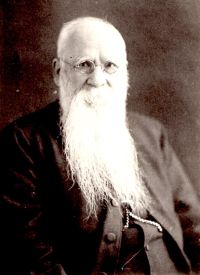
Portrait of Jean Finot Jean Finot,  Modern Saints and Seers

“ But beyond these there is Ai-toen, the supreme, abstract soul of all things, the incarnation of being, which is neither good nor bad, but just is—and that suffices. Far from concerning himself with the affairs of this world, Ai-toen looks down upon them from the seventh heaven, and—leaves them alone. The country is full of "souls" and "spirits," which appear constantly, and often incarnate in the shadows of men. "Beware of him who has lost his shadow," say the Yakuts, for such a one is thought to be dogged by misfortune, which is always ready to fall upon him unawares. ”
Source: Gutenberg

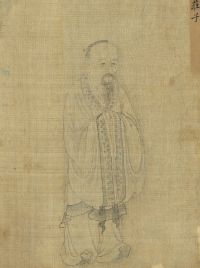
Portrait of John Batchelor John Batchelor,  An Ainu–English–Japanese Dictionary (1905)

“ This is all most interesting when viewed in the light of Ainu studies. In Ainu the verb of existence is a, an, ash, on for the singular, and for the plural. Compare also the Greek ὁν and ὃντος. Further, if, as is said to be the case the sanscrit word as originally meant “to breathe,” the similarity between it and Ainu is yet more striking, for the present-day word for “to blow” in Ainu is as or ash. ”
Source: Wikisource

Get perspective with Kwize: daily news enlightened by great literature