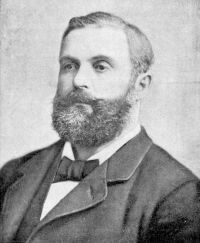
Andrew II of Hungary

Definition and stakes

Robert Nisbet Bain 1911 Encyclopædia Britannica (1911)

He gave away everything, money, villages, domains, whole counties, to the utter impoverishment of the treasury, thereby rendering the crown, for the first time in Hungarian history, dependent upon the great feudatories, who, in Hungary as elsewhere, took all they could get and gave as little as possible in return. In all matters of government, Andrew was equally reckless and haphazard. He is directly responsible for the beginnings of the feudal anarchy which wellnigh led to the extinction of the monarchy at the end of the 13th century.
Source: Wikisource

Alexander Andrew Knox Once a Week (1860)

If Francis Joseph could be induced to part with Venetia by way of sale, and to govern his Empire, especially Hungary, in a constitutional way, what a glorious future might still lie before the Hapsburgs! As the great Danubian Power, Austria would be a far more important member of the European Confederation than she has ever yet been: and destinies might yet await her in the East, which would place her in a position which she could never have achieved as the unreasoning task-mistress of unfortunate Italy.
Source: Wikisource

J. N. Larned History for ready reference, Volume 3… (1895)

While the Hungarian king spent his time in Constantinople, and afterwards in operations round Mount Tabor, Hungary became a scene of violence and rapine, aggravated by the careless and unconstitutional administration of the queen's foreign favourites, as well as by the extortions committed by the oligarchy on their inferiors. Receiving no support from the king of Jerusalem, Andrew resolved on returning home. On his arrival in Hungary, he had the mortification of finding, in addition to a disaffected nobility, a rival to the throne in the person of his son Bela.
Source: Gutenberg

Get perspective with Kwize: daily news enlightened by great literature